
ICA–AP Contributes to Global Dialogue at Launch of Legal Framework Analysis (LFA) 2.0
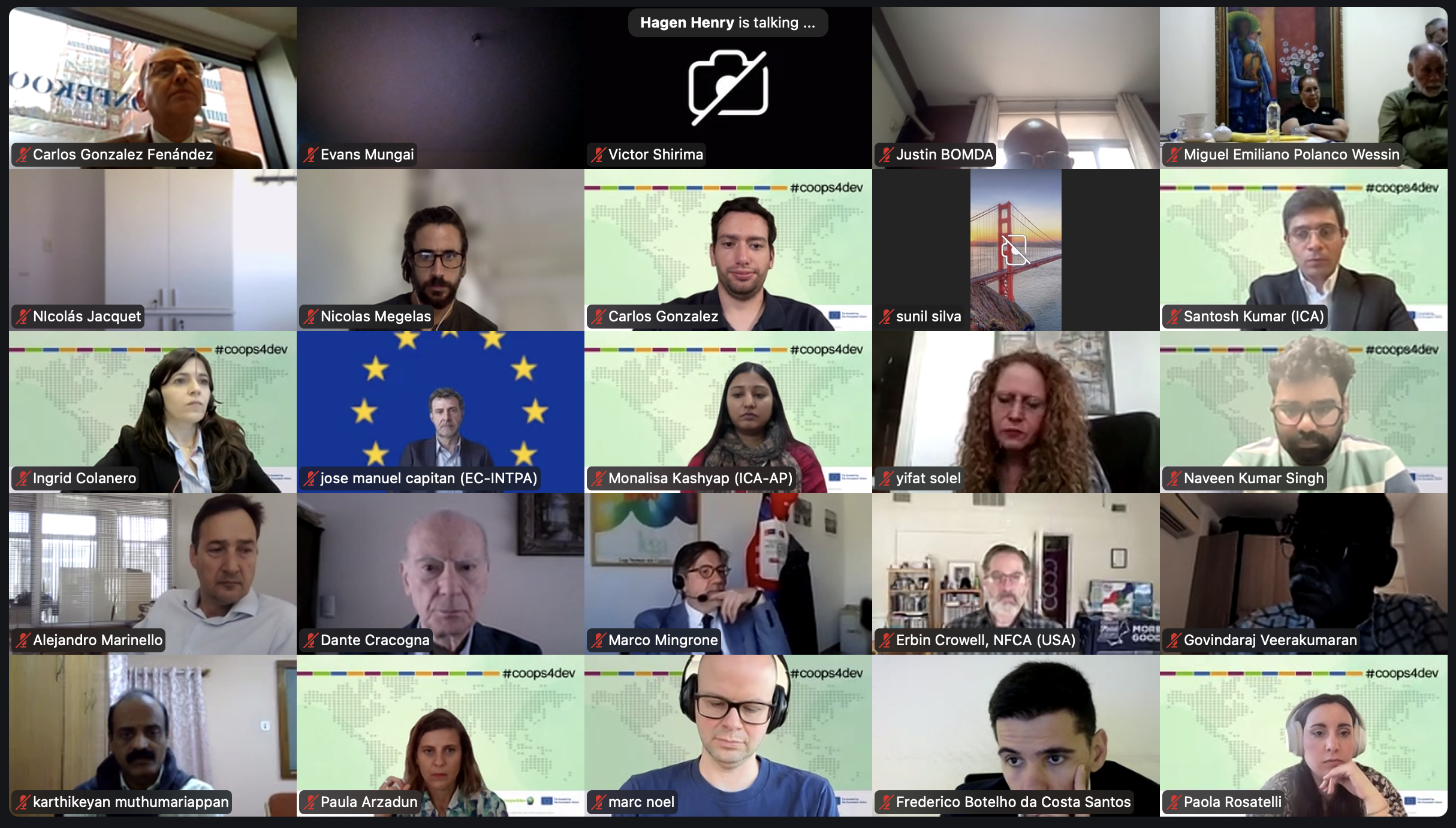
The International Cooperative Alliance (ICA) convened a global public webinar to mark the launch of the Legal Framework Analysis (LFA) 2.0, a harmonized research initiative implemented across its four regions: Africa, the Americas, Asia-Pacific, and Europe, with coordination from the Global Office. The initiative forms part of the ICA–EU Partnership Programme (#coops4dev), which supports cooperative development through capacity building, research and education, policy advocacy, partnerships, and visibility.
The webinar brought together cooperative law experts, researchers, policymakers, and practitioners from across the world to reflect on lessons from the first phase of the Legal Framework Analysis and outline the next phase of comparative research. More than 200 participants joined the session, including representatives from several Asia-Pacific countries such as India, Sri Lanka, Jordan, Nepal, the Philippines, Japan, and Malaysia.
Strengthening the Evidence Base for Cooperative Law
The LFA initiative examines whether national legal and policy frameworks enable or hinder the development of cooperatives. Building on 79 national legal reports produced during the first phase, LFA 2.0 will expand and deepen the analysis using a harmonized questionnaire covering three core pillars:
- Organizational aspects of cooperative forms under national law
- The supportiveness of the legal environment, inspired by the UN Secretary-General’s report on cooperatives and aligned with ILO Recommendation 193
- Expert recommendations to strengthen enabling legal and policy frameworks
LFA 2.0 will also explore emerging themes such as public support agencies, court decisions affecting cooperatives, governance and membership participation in the digital era, and the legal framing of sustainable development responsibilities for cooperatives.
Asia-Pacific Perspectives
Representing the Asia-Pacific region, ICA-AP highlighted the diversity and scale of cooperative legal systems across 29 countries, spanning Southeast Asia, East Asia, South Asia, Central Asia, West Asia, and the Pacific.
During the webinar, Mr. Upali Herath, Chairperson, National Institute of Cooperative Development, Sri Lanka, who served as a sub-regional expert for LFA 1.0 in South Asia, shared reflections on the experience of conducting legal framework analysis in the region. He highlighted how cooperative legislation in many Asia-Pacific countries reflects the principle of autonomy and independence, which is the fourth cooperative principle, while also noting that government programmes and public financing arrangements can sometimes influence cooperative governance structures.
Legal frameworks in the region continue to evolve in response to changing policy priorities and economic realities. Experts highlighted several structural challenges, including:
- The legacy registrar-based regulatory models inherited from colonial legal systems
- Fragmentation in federal legal frameworks across different states or provinces
- Policy pressures that sometimes allow pseudo-cooperative forms to emerge through regulatory gaps
Despite these challenges, the region also offers significant opportunities for cooperative innovation. ICA-AP emphasized the role of cooperatives in advancing emerging development priorities such as the blue and green economy, the care economy, worker ownership models, and stronger inclusion of women and youth.
Next Steps for LFA 2.0 in Asia-Pacific
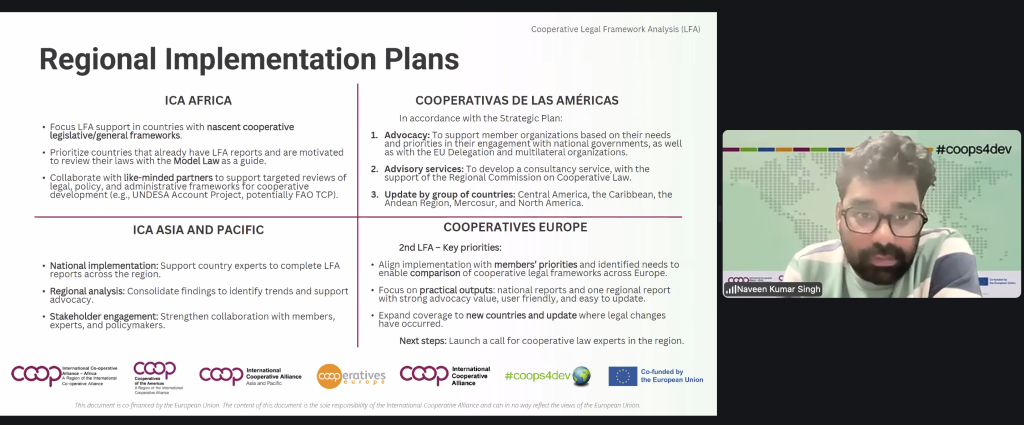
ICA-AP will coordinate the implementation of LFA 2.0 across the region by engaging a mixed pool of new and returning national legal experts. Given the diversity of legal systems across Asia-Pacific, the work will include both sub-regional and regional syntheses of findings.
The results will support stronger engagement with governments, apex cooperative federations, and policymakers, enabling evidence-based dialogue on how legal frameworks can better support cooperative development. The findings will also contribute to regional advocacy and capacity-building efforts.
Global Cooperation for Enabling Legal Environments
Across all ICA regions, the LFA initiative aims to generate comparative legal knowledge that strengthens cooperative identity and aligns legislation with cooperative values and principles. Speakers also highlighted the importance of sharing LFA findings with governments, international organizations, and development partners, including European Union delegations, to promote enabling legal environments for cooperatives worldwide.
By bringing together legal expertise, policy dialogue, and regional experience, the launch of LFA 2.0 marks an important step toward strengthening the legal foundations of the cooperative movement globally.
ICA-AP will continue working with partners and experts across the region to ensure that cooperative law evolves in ways that support member ownership, democratic governance, and sustainable development outcomes for communities throughout Asia and the Pacific.