
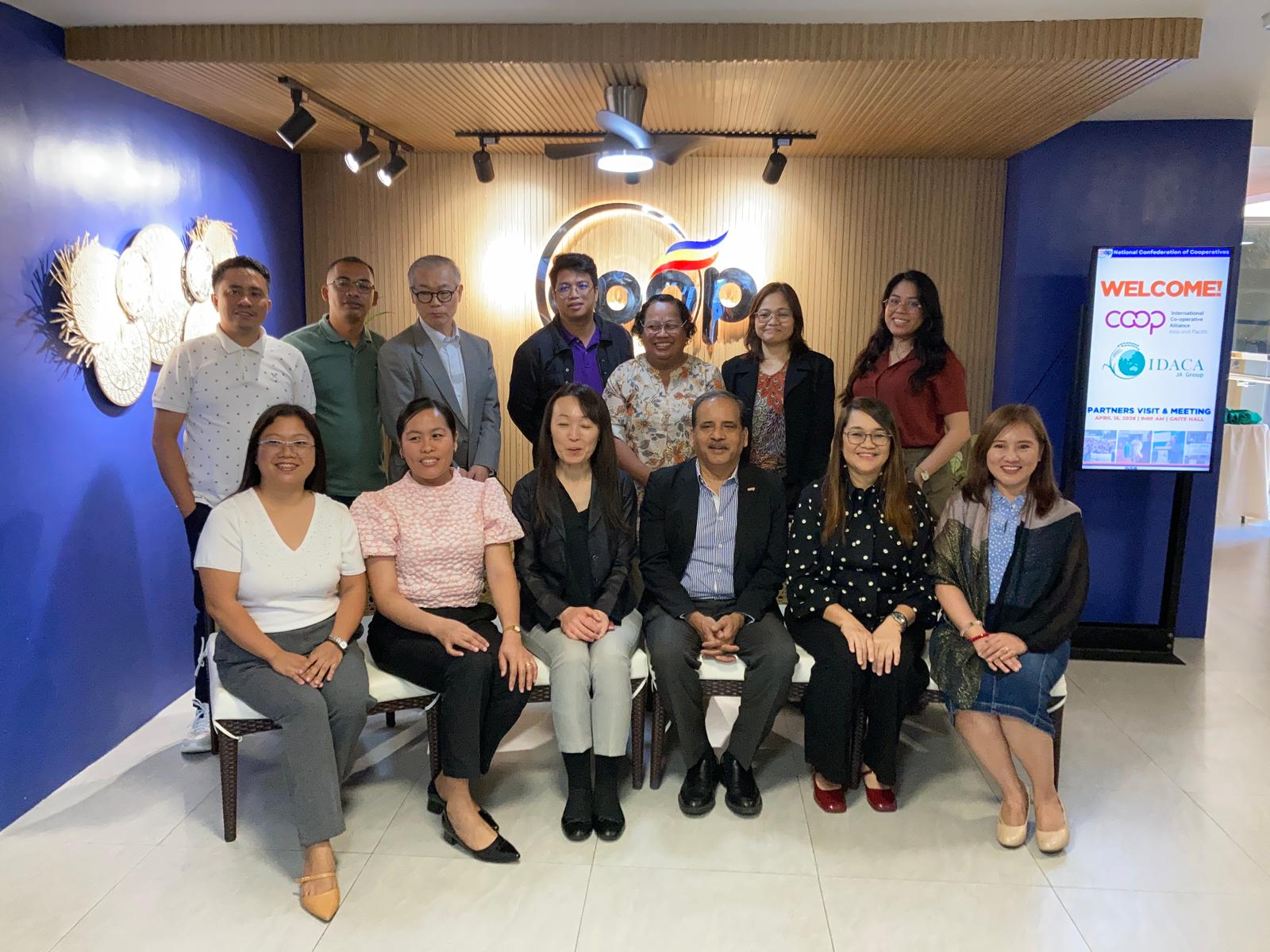
ICA–MAFF Training Follow-up Visit to the Philippines and Indonesia: From Learning to Action
The International Cooperative Alliance Asia and Pacific (ICA-AP), in collaboration with the Institute for the Development of Agricultural Cooperation in Asia (IDACA), recently undertook a follow-up visit to the Philippines and Indonesia to engage with participants of the ICA–MAFF training course. Representatives from IDACA included Ms. Chiba Yukiko, Mr. Nakashima Toru, and Mr. Yasuyuki Kobayashi, while Mr. Balasubramanian Iyer represented ICA-AP. Together, the teams met participants on the ground, reviewed their action plan progress, and conducted site visits to better understand implementation realities.
Action plan development and implementation are central components of the ICA–MAFF training course. Beyond classroom learning, participants are encouraged to translate knowledge into practice through locally relevant initiatives. The follow-up visits provide an important opportunity to assess how participants have internalized their learning, how effectively they have implemented their plans, and how these learnings are being shared within their cooperatives and communities.
Philippines: Building Cooperative Enterprises and Market Systems
In the Philippines, the visit highlighted the strength and diversity of cooperative-led initiatives and participants showed how training inputs have been translated into enterprise development, value chain strengthening, and improved market access.
The seaweed cooperative enterprise in Leyte, led by Ms. Jovita Conales of the Benabaye Primary Multi-Purpose Cooperative, which began as a small, trust-based initiative, has evolved into a cluster-based production and trading system across multiple municipalities. By strengthening aggregation and market linkages, the initiative has improved participation and income opportunities, with the encouraging engagement of members. Mr. Dexter C. Amaranto showcased the Agro-enterprise clustering initiative in banana production. While initial efforts with Lakatan banana faced setbacks, the shift toward Cavendish production—supported by formal agreements with buyers such as DOLE-Stanfilco—showed a realignment with market demand. The initiative highlighted the importance of assured supply systems and quality compliance.
The MASS-SPEC initiative led by Mr. Bernardo through Sta. Catalania Multi-Purpose Cooperative illustrated how cooperatives are integrating sustainability into their operations. By promoting organic fertilizer and clustering rice farmers, the initiative has reduced input costs and strengthened production systems, while also moving toward value addition and mechanization. Similarly, Alaine Chalipo-Banggad presented a model of cooperative-led marketing in Abra. Through the ADTEMPCO Bagsakan Center, farmers are able to aggregate produce, access larger markets, and achieve better price realization.
The HIVE Project, led by Ms. Amy C. Oxales, which focuses on muscovado sugar value chain development, and the HIVE–BSF initiative led by Lorence Pacuño, a youth-led circular economy model integrating waste management, soil health, and feed production, reflected growing innovation within the cooperative sector.
The visit also included the agroenterprise clustering initiative led by Mr. Jupiter Bonilla in Iloilo. His action plan is transitioning from white onion to calamansi production in response to local conditions and market demand. Ms. Maureen O. Cubarol presented a women-focused rice production initiative in Alegria, demonstrating how cooperative finance and shared services can improve productivity and participation. Mr. Jeremias S. Colangoy Jr. highlighted the challenges of rice production, including high input costs, low prices, and market competition. His initiative reflected the need for diversification and stronger market alignment to ensure sustainability.
Indonesia: Enterprise Diversification and Cooperative Ecosystems
In Indonesia, the visit focused on INKUR and its network of people-based cooperative enterprises, where participants are driving enterprise development across sectors.
Ms. Yohana Tamara Yunisa presented a dual-focused action plan linking traditional Ikat weaving with cacao value chain development. The Ikat initiative has improved market access and incomes for women producers, while the expansion into cacao has strengthened aggregation, processing, and value addition. The initiative now engages over 160 farmers and connects to export markets (Netherlands), demonstrating strong growth potential.
Ms. Angela Januarti shared her experience of promoting organic farming among youth in Kelam Hill. While the initiative successfully built awareness and initial engagement, sustaining participation proved challenging due to limited continuity and mentorship. The experience highlighted important lessons on youth engagement and the need for clear economic incentives. Ms. Silvia presented an early-stage initiative focused on Ansabi vegetable production among women farmers in Balai Semandang, which has faced delays and supply chain challenges.
Learning, Adaptation, and Way Forward
Across both countries, the follow-up visit reinforced the importance of contextual adaptation and continuous learning. Participants have applied common principles—such as clustering, value addition, and market linkage—but have adapted their approaches based on local realities. In many cases, initial plans were revised, demonstrating flexibility and responsiveness. A key observation is the role of participants as change agents within their cooperatives. Beyond implementing their own action plans, they are sharing knowledge, influencing institutional practices, and contributing to broader cooperative development.
At the same time, recurring challenges were evident, including market volatility, climate risks, financing constraints, and the need for stronger institutional systems. Addressing these will require continued support through capacity building, partnerships, and access to finance.