
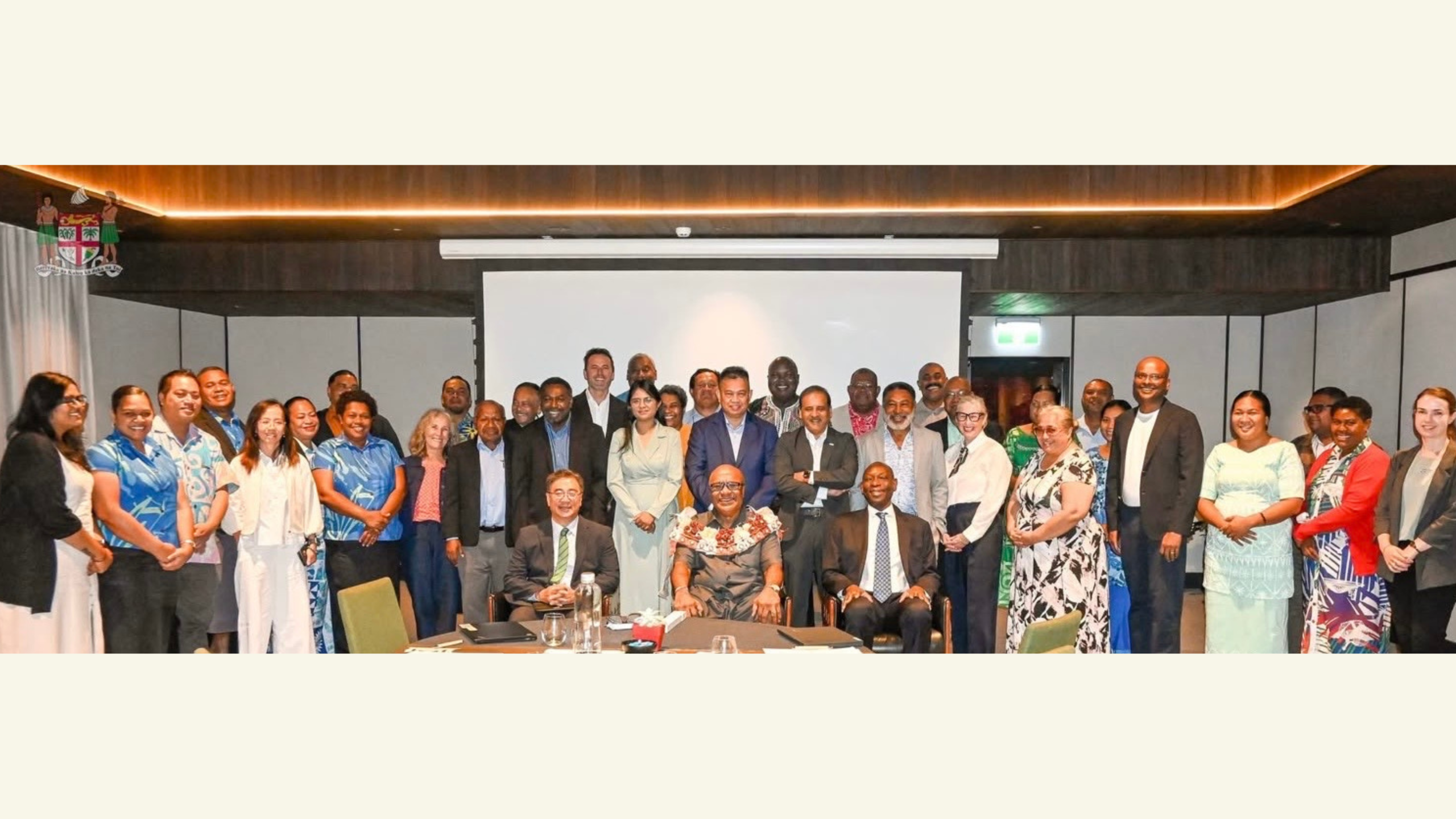
Fiji UN DESA Workshop: Reform, Reinvigorate, Renew: The Pacific’s Cooperative Moment
Those three words framed the United Nations Department of Economic and Social Affairs (UN DESA) Capacity-Building Workshop on Strengthening Pacific Cooperatives through Education, Training and Regional Cooperation, held in Fiji and bringing together the Committee for the Promotion and Advancement of Cooperatives (COPAC), the International Co-operative Alliance (ICA), United Nations Department of Economic and Social Affairs (UNDESA), the International Labour Organization (ILO), the Food and Agriculture Organization (FAO), the United Nations Research Institute for Social Development (UNRISD) and the International Trade Centre, around a shared push for cooperative development in the region. At the centre of discussion: the proposed Pacific Island Cooperative Network (PICON), and two gaps it could close — structured, continuous cooperative education, and stronger trade between Pacific cooperatives.
Fiji’s Deputy Prime Minister, Hon. Manoa Kamikamica, opened by grounding the conversation in Pacific tradition, from early copra cooperatives to the ethos of solesolavaki — working together for a common purpose. Using Amul’s example from India, he showed how one farmer’s litre of milk becomes millions once producers organise, and argued a connected Pacific cooperative movement “should perhaps have begun 30 years ago.” Mr. Andrew Allimadi of UN DESA and Dr. Ilcheong Yi of UNRISD both pushed the same point further: cooperatives are now recognised development partners, and the task is converting that recognition into political will and lived economic results.
On education, Prof. Saswata Biswas of Tribhuvan Sahkari University noted that cooperative managers need to be fluent in both professional management and democratic accountability — a dual skill set most training doesn’t teach. Malaysia’s Datuk Mohd Ali Mansor and the ILO’s Mr. Rayann Koudaih and Ms. Surkafa Katafono pointed to adaptable models, including the ILO’s My.COOP and Start.COOP tools, that PICON could localise for the Pacific rather than reinvent from scratch.
On trade, the message was consistent: ambition needs infrastructure. Mr. Senthil Nathan of Fairtrade Australia and New Zealand summed up market access in three words, quality, reliability, story, while Ms. Deepika Singh of Fiji’s Ministry of Foreign Affairs and External Trade cautioned cooperatives to “export because you are ready, not because you can.” Australian examples from Ms. Melina Morrison of BCCM, CBH Group, Almondco, Geraldton Fishermen’s Co-operative, showed what’s possible once cooperatives own more of their supply chain, while Mr. George Ombado of the African Confederation of Co-operative Savings and Credit Associations (ACCOSCA) laid out the financial sequence underpinning it all: governance builds trust, trust attracts savings, savings become capital, capital fuels growth.
Fiji’s Registrar of Cooperatives, Mr. Iosefo Koroidimuri, positioned PICON as a regional coordination platform that could sit within the Pacific Islands Forum framework, covering everything from policy reform to trade facilitation to representing Pacific cooperative interests globally. But the caution from several speakers, including Ms. Morrison, was as important as the ambition: PICON should start with a focused mandate and grow into complexity, not the reverse.
For ICA-AP, the workshop’s real achievement was consensus. The next steps are concrete: advocacy with relevant ministries, ministerial endorsement, and formal entry into the Pacific Islands Forum process. As the region put it in Fiji, the opportunity is real, but momentum now has to be protected.