
In Ramallah, Palestine’s Cooperative Movement Confronts Occupation, Poverty and the Path Forward
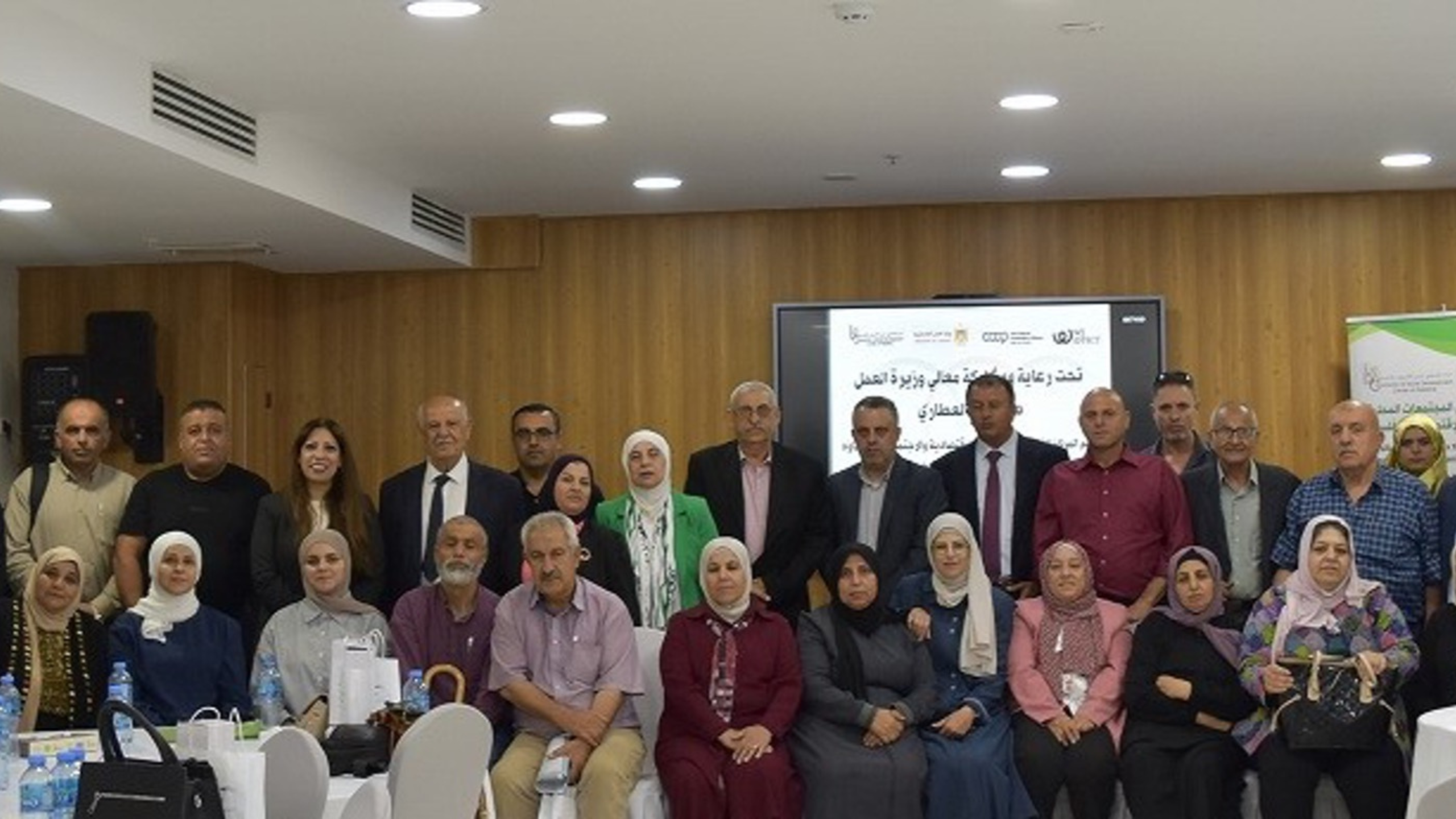
Palestine marked the International Day of Cooperatives with an interactive dialogue session in Ramallah, “The Reality, Challenges, and Prospects for the Development of the Cooperative Sector in Palestine,” organised by the Economic and Social Development Center of Palestine (ESDC) under the patronage of H.E. Dr. Inas Attari, Minister of Labour, and held in collaboration with and with support from ICA-AP. Around 100 participants attended, drawing together cooperative unions and cooperatives from across Palestine, public sector officials, and representatives of international organisations supporting the movement.
Opening the session, Dr. Attari framed cooperatives as a fundamental pillar of Palestine’s economic and social resilience, particularly against the backdrop of occupation and rising unemployment and poverty, pointing to their role in creating jobs, strengthening food security and driving sustainable development. She reaffirmed the Ministry of Labour’s commitment to partnering with national and international organisations to build institutional capacity, empower women and youth, and widen access to finance, training and marketing support. Palestine’s cooperative sector currently counts 369 active cooperatives with more than 35,000 members, she noted, calling for expanded support to housing and consumer cooperatives given their role in addressing housing shortages and the rising cost of living, and for a stronger culture of cooperation as an investment in national resilience and social justice.
Eng. Mahmoud Hussein, Chairman of ESDC’s Board of Directors, outlined the organisation’s work strengthening cooperatives and member-based organisations as social economy actors, pointing to a range of interventions underway with international partners to build economic, institutional, service delivery and marketing capacity across the sector. He also noted ESDC’s expanding engagement with regional and international cooperative bodies, including ICA and the Arab Cooperative Union, as a source of knowledge-sharing and partnership.
Mr. Ezz Eddin Abu Taha, Secretary General of the General Cooperative Union in Palestine, argued the movement needs to move past diagnosis and into implementation — legislative reform, sustained government support, and stronger donor partnerships to build up cooperative unions’ institutional structures. Unions, he said, are a strategic pillar for cooperative resilience and need greater empowerment to act as genuine partners in economic and social development.
Mr. Muneef Al-Rimawi, Head of the Cooperative Sector at the Ministry of Labour, underscored cooperatives’ role in inclusive economic and social development, particularly as a source of employment for young people and small-scale producers. His review of the sector across Palestine’s governorates included a sobering account of conditions in Gaza, where the cooperative sector has suffered systematic destruction, including the demolition of cooperative housing and the near-total loss of the agricultural cooperative sector.
The session closed with a set of recommendations calling for stronger collaboration between government institutions, the cooperative sector and civil society organisations supporting cooperative development going forward.