
Cooperatives and the Future of Elderly Care: Findings from Asia-Pacific Shared at the CICOPA Side Event
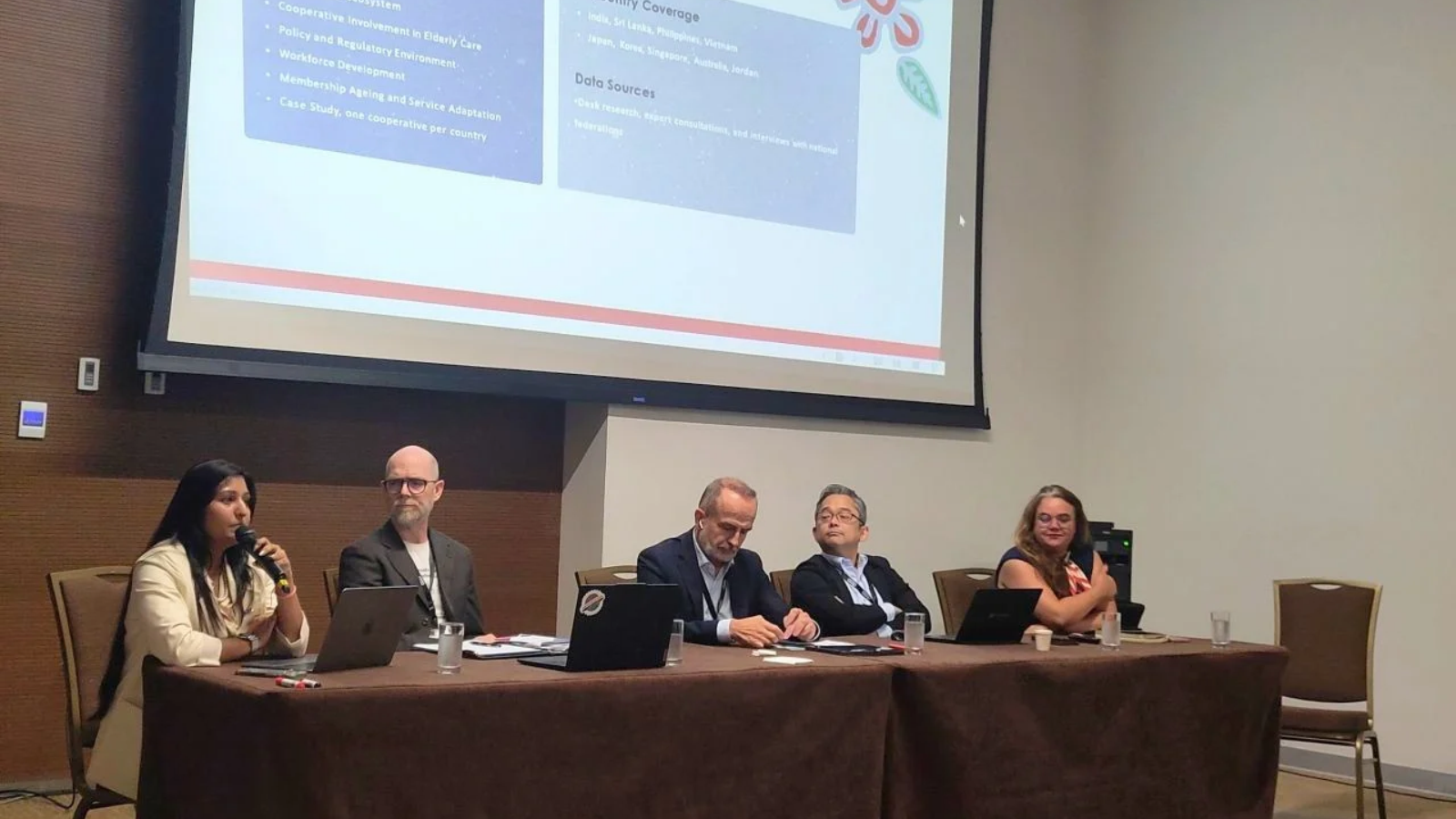
As populations age across the world, the question of who will care for older persons, and under what conditions, is becoming urgent. At the CICOPA side event “Building the Care Economy Together: Cooperative Solutions for Decent Work and Inclusion,” held during the ICA Global Conference in Panama on 17 September, Ms. Monalisa Kashyap, Program Coordinator and Advocacy Officer at ICA-AP, shared early findings from “Creating a Better World for Aging with Dignity: Cooperative Solutions for Elderly Care (2025 to 2028),” an ICA-AP initiative under the ICA-EU Partnership #coops4dev.
The initiative began with a concept note built on gaps identified through desk research. Bilateral consultations followed with BCCM (Australia), CICOPA, SEWA (India) and the ILO, along with independent experts including Dr. Sidsel Grimstad and Mr. Paul Thambar, to refine five planned interventions: the formalization of the Coop4Care AP Working Group, a regional mapping study on cooperatives’ contribution to elderly care, an Asia-Pacific ageism awareness campaign, the SheCares Cooperative Entrepreneurship Program, and Aging Matters: Care Chronicles. The Coop4Care AP Working Group now serves as an advisory body providing guidance and strategic direction, and held its first meeting in the week of 13 July 2026.
The mapping study uses a seven-section tool covering the country profile, the elderly care ecosystem, cooperative involvement, the policy and regulatory environment, workforce development, membership aging and service adaptation, and a case study of one cooperative per country. It spans India, Sri Lanka, the Philippines, Vietnam, Korea, Australia and Jordan, drawing on desk research, expert consultations and interviews with national federations.
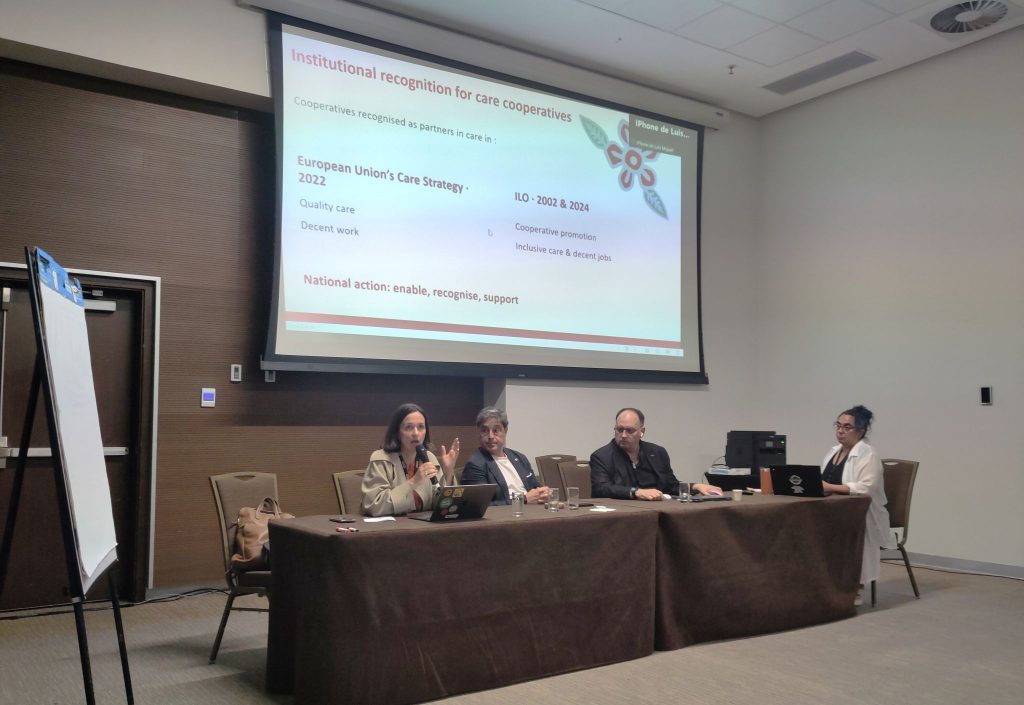
Preliminary findings from India and Sri Lanka were shared at the session. India has 428 hospital and health cooperatives, with hospital cooperatives the largest segment at 261 (61%). About 146 million people, or 10% of the population, are aged 60 or above, a figure projected to reach 347 million (21%) by 2050. Kerala’s Sayamprabha Homes model stands out for its integration with local health systems, including ASHA and Kudumbashree. The policy landscape includes the National Policy on Older Persons (2019), the Atal Vayo Abhyuday Yojana and cashless health cover under PMJAY for people aged 70 and above, though government support is assessed as moderate in practice.
Sri Lanka is the fastest-aging country in South Asia, with about 12 to 16% of its population aged 60 and above today and a projected 28% by 2050. Its cooperative movement is vast, with 16,000 cooperatives and 8.1 million members, about 38% of the population, including 95 registered healthcare cooperative societies and SANASA’s network of over 8,000 thrift and credit societies. A Health Department Thrift and Credit Cooperative is piloting dedicated elderly care services across five districts, with two further union-backed pilots under way. National model by-laws for care cooperatives, launched in August 2025, prioritize women workers and the formalization of care work, with the ILO providing policy, training and technical support.
In both countries, cooperatives already have a meaningful foothold in health and care, and governments are beginning to create enabling frameworks. Yet regulatory areas specific to care cooperatives are still being mapped, which makes continued research, advocacy and cross-regional exchange essential. The conversation with CICOPA and partners from the Americas offered a valuable opportunity to compare approaches and build shared solutions for decent work and inclusion in the care economy.