
Legacoop: Brewing Cooperation and Sustainability Across Borders
With roots stretching back to 1886, Legacoop is Italy’s oldest cooperative association, uniting over 10,000 cooperatives and more than 7 million members under a shared vision of collective growth and solidarity. Over the years, Legacoop has built a dynamic presence across key economic sectors, including agriculture, consumer goods, social services, and culture, becoming a cornerstone of Italy’s cooperative economy. But its mission extends well beyond national borders. Through its international development arm, Haliéus, Legacoop has become a strong advocate for cooperation as a tool for inclusive, sustainable development in the Global South.
Legacoop’s evolution is as much about values as it is about scale. While the organisation has grown to represent billions in cooperative value, its core focus remains on building a cooperative identity that empowers individuals and communities. It offers services to create and grow businesses, while also acting as a representative and supervisory body that helps member cooperatives stay true to democratic governance and solidarity-based principles. Its international efforts, led by Haliéus, reflect the same ethos, bringing the cooperative model to diverse communities facing economic and ecological challenges.
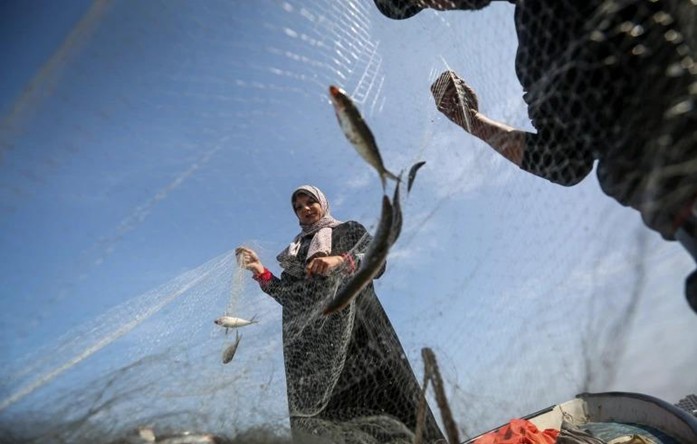
Legacoop’s current international engagements are wide range. In the Mediterranean, the FISH MED NET project is supporting artisanal fisheries in countries like Lebanon, Tunisia, and Palestine. In Vietnam, the YouCool project is helping young cooperative members adapt to digital transformation. But it is in the highlands of southern Lao PDR that Legacoop’s cooperative model is taking particularly meaningful root.
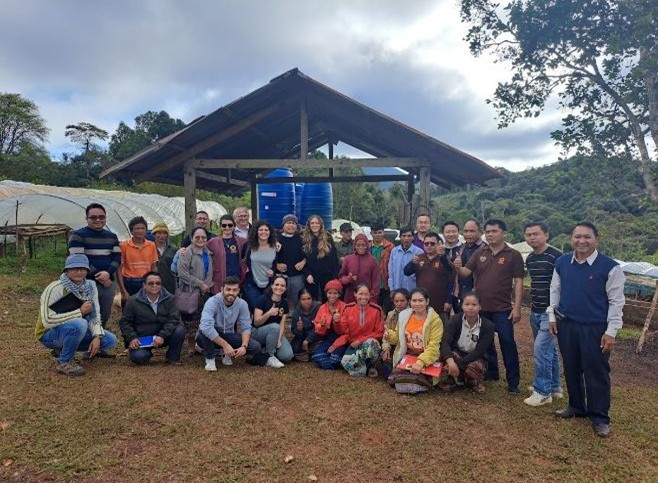
In the Dak Cheung District of Sekong Province, where coffee is both a cultural anchor and an economic lifeline, Legacoop is implementing SuperWeCoffee, a project that aims to green the coffee value chain while promoting gender equality and cooperative ownership. This remote district is home to the Talieng ethnic minority, many of whom work as smallholder coffee farmers in one of the country’s most underserved regions. The project directly targets 400 farmers across 15 villages, 70 percent of whom are women. Despite their central role in coffee production, these women have traditionally had limited access to infrastructure, training, or leadership opportunities.
The challenges facing coffee producers in Dak Cheung are deeply structural: limited drying and storage infrastructure, outdated processing techniques, and a lack of collective organisation have kept the region’s coffee from reaching its potential. Moreover, poor market linkages and low incentives for quality have discouraged long-term investment. SuperWeCoffee is responding with a comprehensive model that combines technical training with cooperative development. By strengthening awareness of cooperative principles and providing equipment and capacity building, the project is enabling producers not just to improve quality, but to take ownership of the value chain.
Importantly, this initiative is aligned with the broader development goals set out in the SWITCH Asia Programme. It contributes to SDG 12 by introducing low input, organic production practices and improving traceability, and to SDG 5 by actively fostering women’s leadership in producer groups and cooperative boards. The results are already visible: permanent drying facilities and washing stations are now being operated with greater efficiency, and 30 percent of women producers have stepped into managerial roles within their groups. Thanks to training organised with ICA AP, 4Form, and the ILO, awareness of cooperative identity and governance has deepened significantly across the 15 villages. With the recent approval of Lao PDR’s Cooperative Law, the groundwork has been laid for the establishment of the district’s first ever coffee cooperative, a powerful example of how international cooperation can support local agency.
Legacoop’s global advocacy is further strengthened by the Development Data Platform developed in partnership with Haliéus. The platform helps map and measure cooperative contributions to the Sustainable Development Goals, serving as an evidence base for dialogue with policymakers and international institutions. It supports Legacoop’s ambition to position cooperatives as essential actors in development policy and programming.
In the coming years, Legacoop intends to expand its efforts by building stronger ties with financial institutions, government agencies, and civil society actors. The goal is to ensure that cooperatives are not just recognised as viable enterprises, but as essential tools for achieving fair and sustainable development in emerging economies.
From the coffee fields of Dak Cheung to the fish markets of the Mediterranean, Legacoop continues to demonstrate that the cooperative model, when placed in the hands of local communities, can transform livelihoods, build resilience, and empower people to shape their own futures.