
Malaysia’s Cooperative Story: Scale, Service, and Social Purpose
During a recent visit to Malaysia, Mr. Balu Iyer, Regional Director of the International Cooperative Alliance – Asia and Pacific (ICA-AP), engaged with cooperative leaders and institutions across the country. In this article, he reflects on his experiences and shares insights into how Malaysian cooperatives continue to advance economic participation, social inclusion, and community development.
Malaysia’s cooperative movement offers an important reminder of how cooperatives can evolve across generations while continuing to remain rooted in community needs, economic participation, and social purpose. During my recent visit to Malaysia, I had the opportunity to interact with ICA members and cooperatives whose stories collectively reflected the diversity, strength, and continued relevance of the country’s cooperative ecosystem.
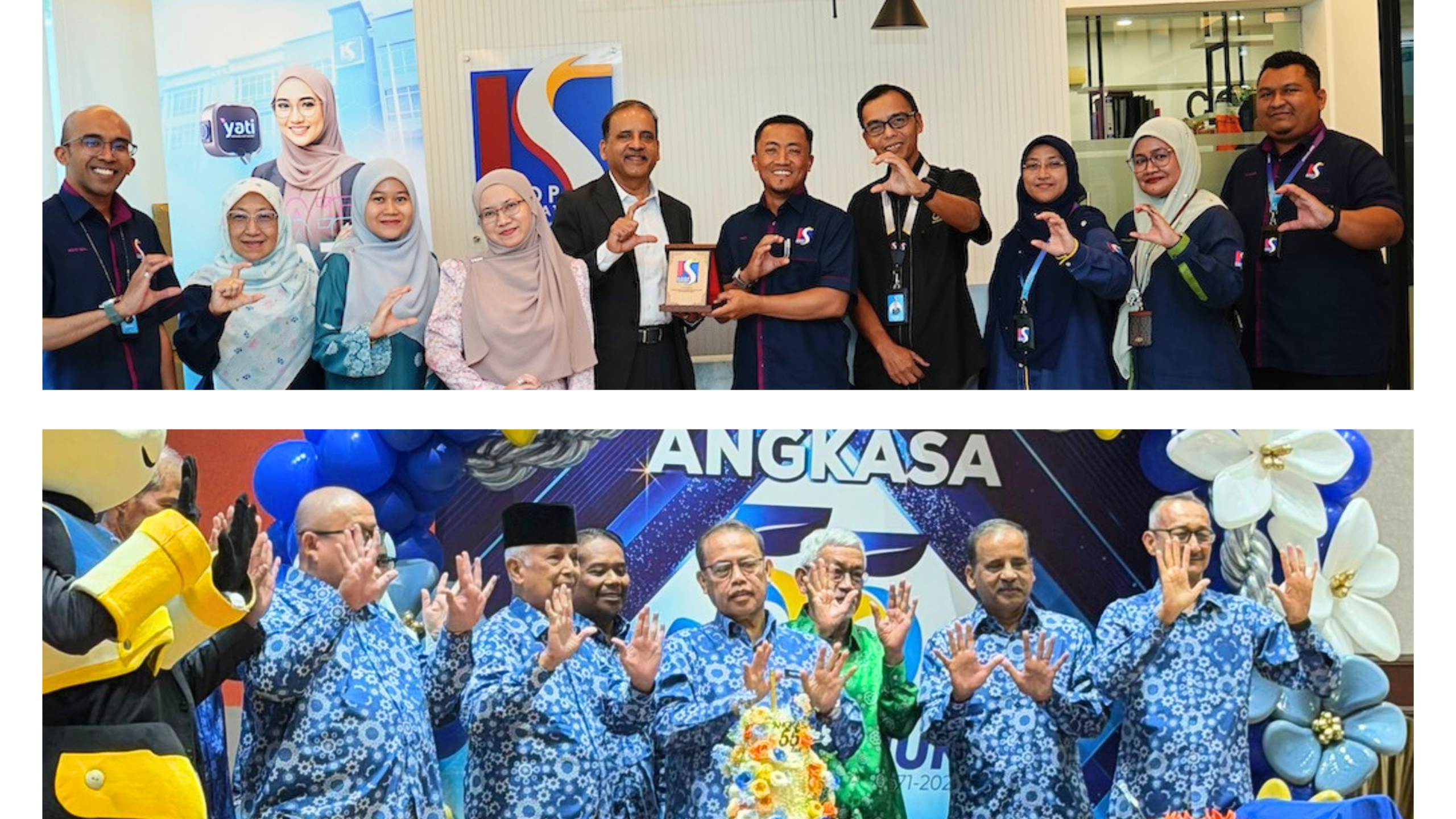
One of the highlights of the visit was participating in the 56th anniversary celebrations of ANGKASA, Malaysia’s national cooperative apex organization. Established in 1971 during a defining period in the country’s development following the introduction of the New Economic Policy (NEP), ANGKASA emerged to strengthen and represent cooperatives as instruments of economic participation, social mobility, and community development. Over the decades, it has played a central role in supporting cooperative education, governance, youth engagement, women’s leadership, and regional cooperation.
Malaysia’s cooperative movement has also become internationally recognized for its strong school cooperative model, where students are introduced early to cooperative values, entrepreneurship, democratic participation, and financial responsibility. During the celebrations, the release of the Cooperative Values Book reinforced the movement’s continued emphasis on values such as Amanah (trust and responsibility), Sadik (truthfulness), and Telus (transparency), alongside integrity, sustainability, and solidarity.
I also had the opportunity to visit the National Land Finance Cooperative Society (NLFCS) Kuala Perak plantation with Datuk B. Sahadevan, Managing Director and Dato S. Kili Rathnaraj, Chief Executive Officer. The day also happened to be their 66th anniversary! Founded to support plantation workers and their families during a time of economic insecurity and marginalization, NLFCS reflects the enduring strength of worker solidarity and community ownership.
Walking through the plantation with Datuk B. Sahadevan and Dato S. Kili Rathnaraj and talking to them, I could sense both institutional pride and a deep commitment toward future generations. What was especially encouraging was hearing how NLFCS continues to evolve alongside member needs. While earlier decades focused on land, livelihoods, and economic mobility, the cooperative today is increasingly thinking about ageing, healthcare, and long-term care for members and communities.
During the visit, I also met Mr. Kamalanathan, a participant of the 2015 ICA–MAFF training course organized with IDACA Japan, who shared how training on traceability and field management systems had helped improve plantation productivity and operational efficiency over time.
Another memorable experience was visiting Koop Sahabat, a cooperative that reflects how modern cooperatives can combine scale, innovation, and social purpose. Established in 2012, Koop Sahabat today has close to 475,000 members across Malaysia, share capital of nearly RM140 million, and shareholders’ funds approaching RM950 million. Inspired by the community empowerment ideas associated with Muhammad Yunus and the Grameen movement, the cooperative has expanded into financial services, Ar-Rahnu, gold trading, healthcare, retail, real estate, and digital services through its Super App and AI chatbot.
What was particularly striking was that nearly 91% of its members are women micro-entrepreneurs from low-income backgrounds. The cooperative is now looking at bringing together products created by women members across different Malaysian states under a common Koop Sahabat brand and market platform. Despite its scale and commercial expansion, the cooperative continues to remain deeply community-centered and socially driven. Malaysia’s cooperatives continue to demonstrate how economic participation and social purpose can go hand in hand. At a time when communities across the world are grappling with inequality, ageing populations, and economic uncertainty, the Malaysian cooperative experience offers valuable lessons on resilience, solidarity, and inclusive development.