
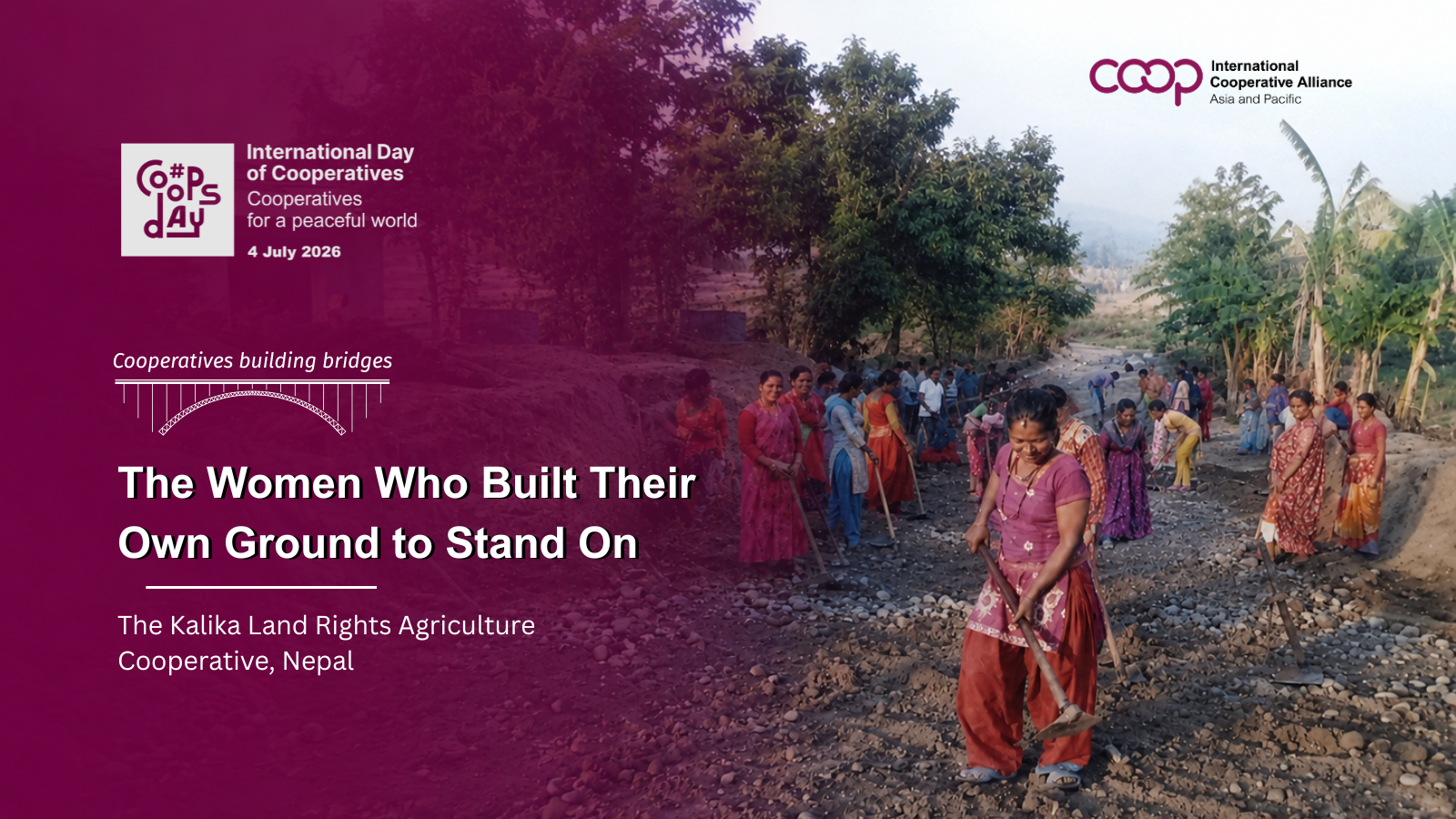
The Women Who Built Their Own Ground to Stand On
A CoopsDay 2026 story — Cooperatives Building Bridges
In the Tharu language, Sehari means a place of taking rest. It is a small cruelty of naming that, for decades, the place offered its residents almost none. The sixty families who settled here, in the flood plain of the Mohana-Khutiya river basin in Nepal’s far west, had been pushed off their original land back in 1985. What they found instead was government land nobody else wanted: fertile enough to farm, but legally theirs in no way that mattered. No title. No Lalpurja, the land ownership certificate that unlocks nearly everything else in rural Nepal, a bank loan, a subsidy, a sense that the ground under your house cannot simply be taken back.
For years, that absence of paper was the real border of Sehari’s world. Without it, families couldn’t get government seed or fertilizer. Without it, they couldn’t borrow from a bank, only from local moneylenders charging five percent a month, a rate that turns a bad season into a debt sentence. Without it, eviction was never a distant threat, dozers clearing informal settlements under the banner of forest protection are a documented, recurring feature of life in Nepal’s Terai. Sehari’s sixty households were, on paper, nowhere.
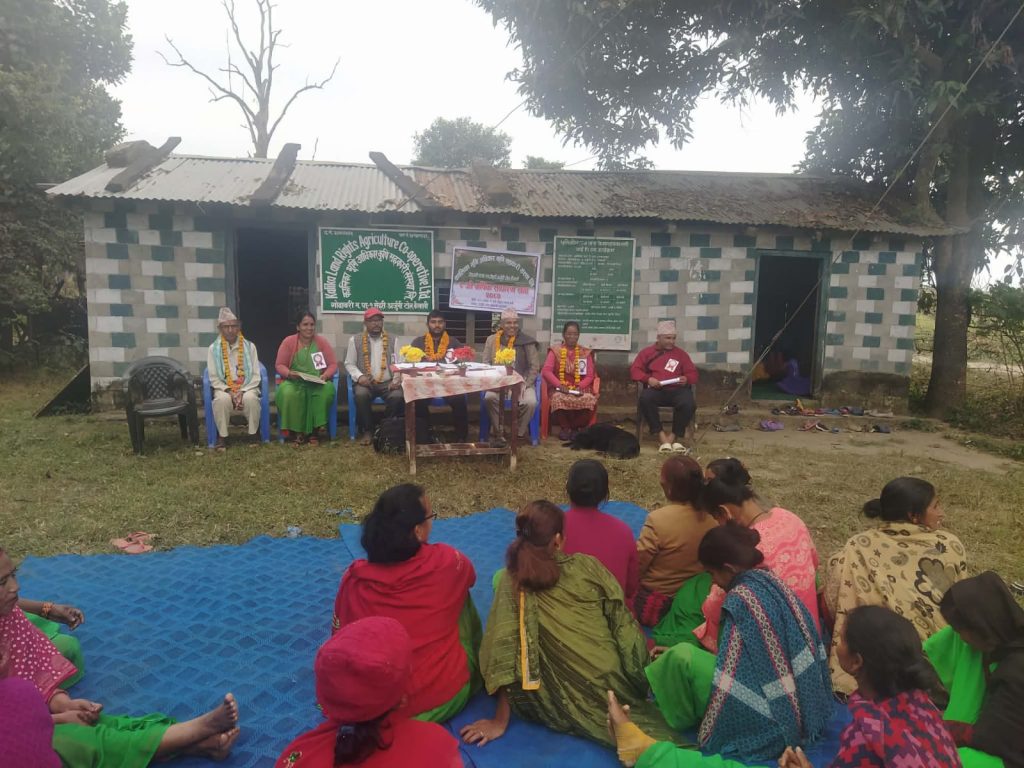
Credit: Mr. Upakar Bhandari
Ten Rupees at a Time
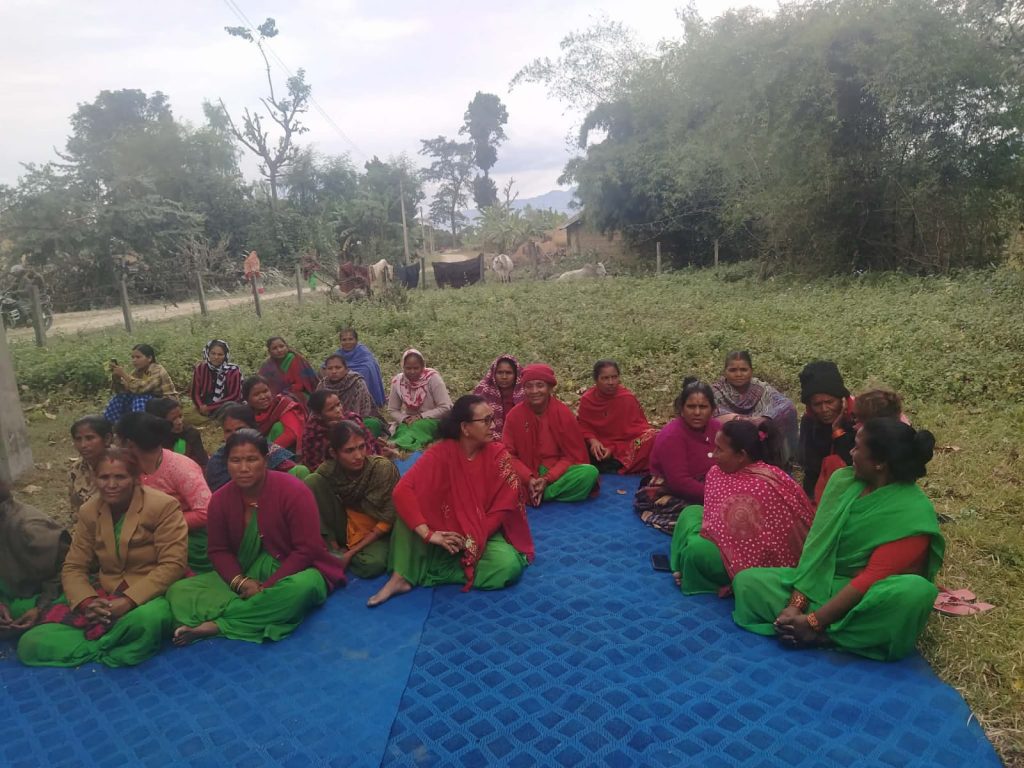
The shift began, as these things often do, with something almost too small to call a plan. In 2007, organizers from Kailali’s District Land Rights Forum started holding sensitization meetings in Sehari. Out of those meetings came the Sehari Village Land Rights Forum, and out of the forum came a rule: every woman who joined would put in 10 rupees a month, a movement fund, small enough that nobody’s household budget would notice, but steady enough that it would eventually add up to something the community owned outright.
It was never only about the money. Ten rupees a month is a habit as much as a contribution, a way of making sure everyone shows up, everyone has a stake, and no single person’s crisis or generosity determines whether the fund survives. By the time the women realized political organizing alone wouldn’t fill an empty rice bin, the fund had grown enough that a genuinely audacious idea started to look possible: registering their own agricultural cooperative.
The Bureaucracy That Didn’t Want Them
What happened next is the part of Sehari’s story that should make anyone uncomfortable, because it wasn’t hidden or subtle. To register a cooperative, the state required the women to show a bank balance of 50,000 rupees, money they didn’t have, purely to prove they were serious. It required a mandatory three-day training course, priced at 12,000 rupees a day, a fee structure that assumes the applicant already has resources rather than needs them. The movement fund held 16,000 rupees at the time. The gap wasn’t a technicality. It was, functionally, a wall built to keep exactly this kind of applicant out.
The women didn’t go around the wall. They climbed it, piece by piece. A sympathetic local businessman lent them the 50,000 rupees, interest-free, solely so it could sit in an account long enough to be shown to an official and then be returned. They negotiated the training fee down. They asked their allied NGO to cover what remained, while they themselves paid for their own food and lodging during the three days of training. And in a final, almost sly piece of resourcefulness, they used the very trainers the state had forced them to hire to draft their cooperative’s bylaws, extracting maximum value from a requirement designed to extract money from them instead.
Between the initial organizing meeting and the day a government office finally accepted their paperwork, some of these women walked three hours each way to Dhangadhi, on foot, for ten straight days, simply to keep their application from being quietly forgotten. In 2013, the Kalika Land Rights Agriculture Cooperative was registered. Its opening share capital was 12,500 rupees. Its real founding capital was closer to seven years of refusing to give up.
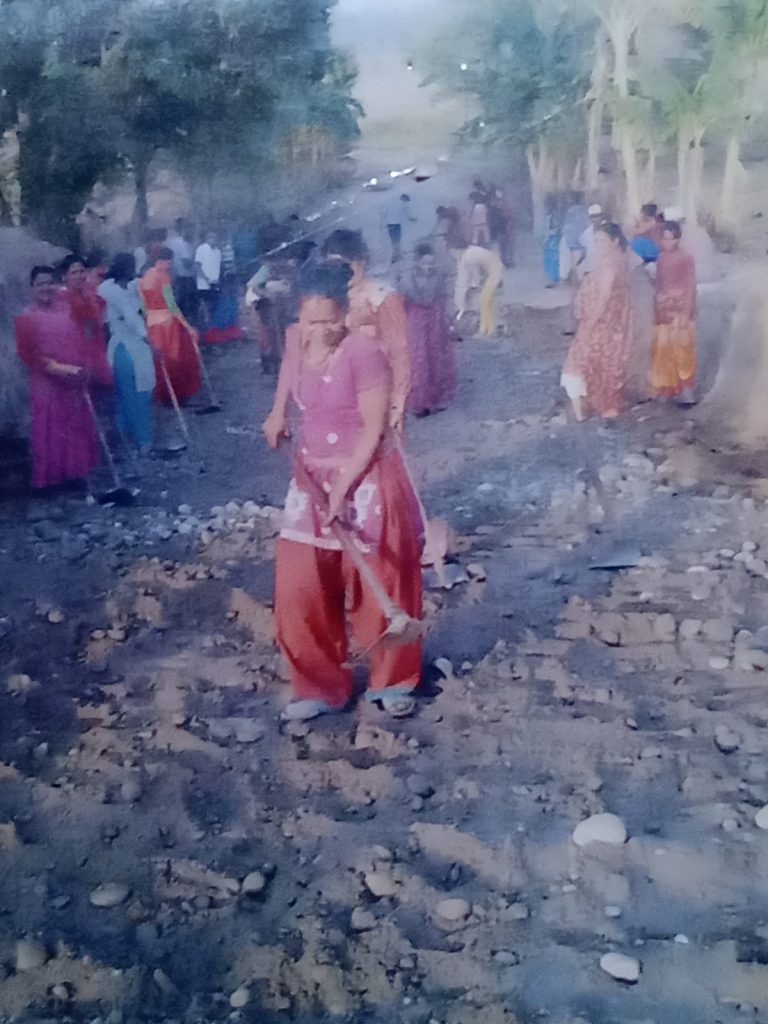
Credit: Mr. Upakar Bhandari
What a Registration Certificate Actually Unlocks
The effect of formal registration is easy to understate if you’ve never lived without it. Overnight, Sehari’s cooperative became visible to the state in a way the individual households never had been. Subsidised seed, fertiliser, and equipment that the municipality’s Agriculture and Livestock Branch had always distributed, but never to people who officially didn’t exist as an economic entity, started reaching Sehari as a matter of course.
The predatory lending market, the five-percent-a-month loans that had quietly bled the village for a generation, didn’t need to be argued out of existence. It simply became unnecessary. With savings pooled and a modest seed fund from the district’s cooperative division, members could borrow from each other, at rates that didn’t punish a bad season into a bad decade.
What that credit actually built is where the story stops being abstract. Anita Kumari Chaudhary took a 20,000-rupee loan, learned tailoring, and now runs a garment shop with four sewing machines, one employee, and a habit of training other local women into the trade herself. Rekhadevi Bohora, the cooperative’s secretary, used a loan to open a retail shop profitable enough that her husband no longer needed to migrate to India for work, a quiet, almost invisible kind of family reunification that no headline captures. Two male members, Dhan Bahadur B.K. and Bal Bahadur B.K., used loans to buy light machinery, ending days that used to mean seven hours in dense forest gathering firewood to sell, one of the more dangerous ways a person can make a living.
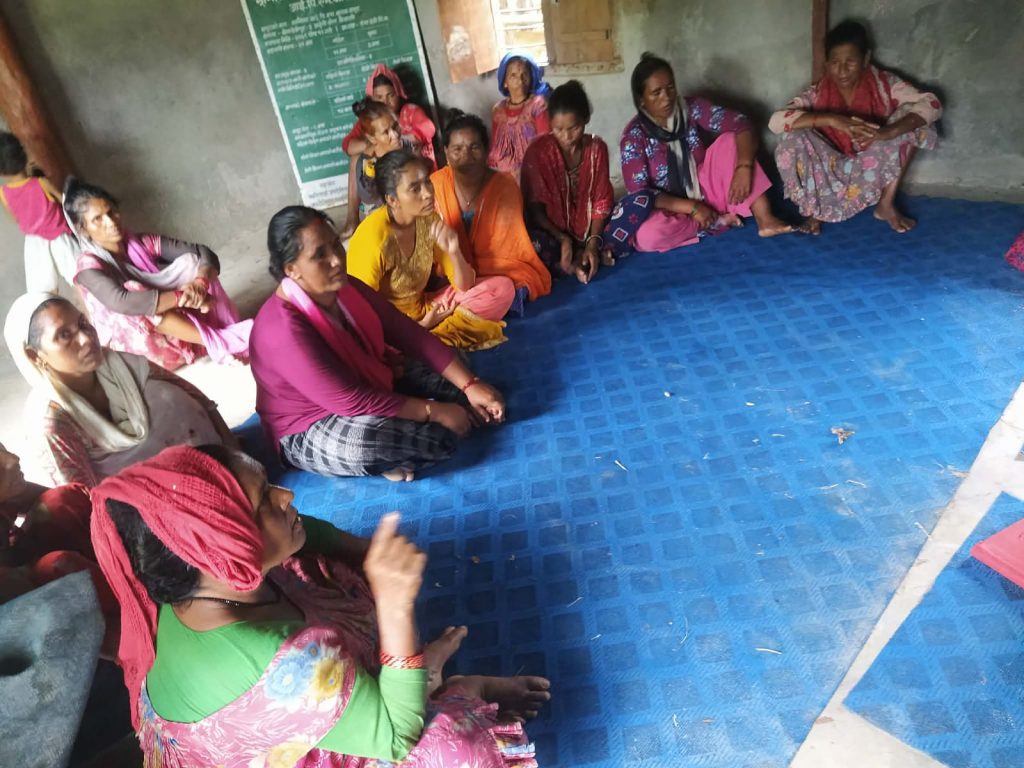
Credit: Mr. Upakar Bhandari
Building the Ground Underneath the Ground
A cooperative that formed to fight for land tenure turned out, almost as a side effect, to become the closest thing Sehari had to a local government. Members organized the construction of roads, a communal building, and deep tube wells for drinking water, work that reduced waterborne disease simply by existing. They built an irrigation canal network that now drought-proofs some seventy hectares of farmland across seventy households, insulating a community that used to live at the mercy of an unreliable monsoon.
Because Sehari sits inside a flood basin where waters have been recorded rising over 17 metres, the cooperative didn’t wait for a federal agency to notice. It partnered directly with the district’s disaster management office to build embankments along the Khutiya river’s most exposed stretches, and led its own reforestation of degraded land nearby, work that stabilises soil against erosion while quietly restocking fodder and raw material for the community’s draft animals. None of this was anyone’s job. It became the cooperative’s job because no one else was doing it.
Credit: Mr. Upakar Bhandari
A Constitution Written in Everyday Behaviour
Perhaps the most quietly radical document in this whole story isn’t a land title. It’s the cooperative’s Code of Conduct, inherited from its founding years as a rights forum, and enforced not by police but by the group itself. Members are barred from corruption, domestic and sexual violence, child abuse, and caste or gender discrimination. They’re expected to keep basic household sanitation, ensure their children attend school, and work toward food self-sufficiency.
It is, in effect, a small, self-written social contract, the kind of document that doesn’t sound remarkable until you consider that a formal government commission has, at various points, tried and failed at reforming land rights for the exact same population and mostly failed. Sehari’s women wrote their own rules for how to treat each other, then actually followed them. That may be the least measurable and most important line in this entire case study.
Why a Land Rights Cooperative Belongs in a Peace Campaign
It would be reasonable to read all of this as a development success story and leave it there. That undersells what actually happened. Every one of Sehari’s bridges was built across a gap the state itself had created and then failed to close: the bridge between a household and formal credit, between women and economic independence, between a family and the need to send a husband across a border for work, between a flood-prone settlement and the infrastructure that might have protected it decades ago.
Peace, at the level Sehari’s residents actually experience it, was never going to arrive as a treaty or a national land reform bill, however overdue. Nepal has formed and dissolved 23 different land commissions without resolving the landlessness crisis that defines places like Sehari; the most recent one collected 1.35 million applications, 130,000 of them from Kailali district alone, before being abolished by a coalition reshuffle in 2024. Waiting for that machinery to work has not been a viable strategy for the women of Sehari. Building their own, smaller, more accountable machinery has been.
What Still Isn’t Theirs
It would be dishonest to end this story on triumph alone. The majority of Sehari’s households still don’t hold a Lalpurja. Without it, the cooperative’s members remain locked out of large commercial loans, premium subsidies, and the basic psychological safety of knowing their homes can’t be legally erased. Everything the cooperative has built, the roads, the irrigation canals, the embankments, the small businesses, sits on land the community doesn’t yet own on paper.
That unfinished part of the story is, in its own way, the most honest argument for why cooperatives matter in a peacebuilding conversation. They are not a substitute for justice from the state. They are what a community builds while it keeps demanding that justice, so that the waiting doesn’t have to mean starving, or fleeing, or staying silent. Sehari’s women didn’t wait for permission to become resilient. They organized it themselves, ten rupees at a time, and are still, right now, waiting for the paperwork to catch up to what they’ve already proven.