
In Hangzhou, Cooperative Youth Take on the Question of Ethical AI
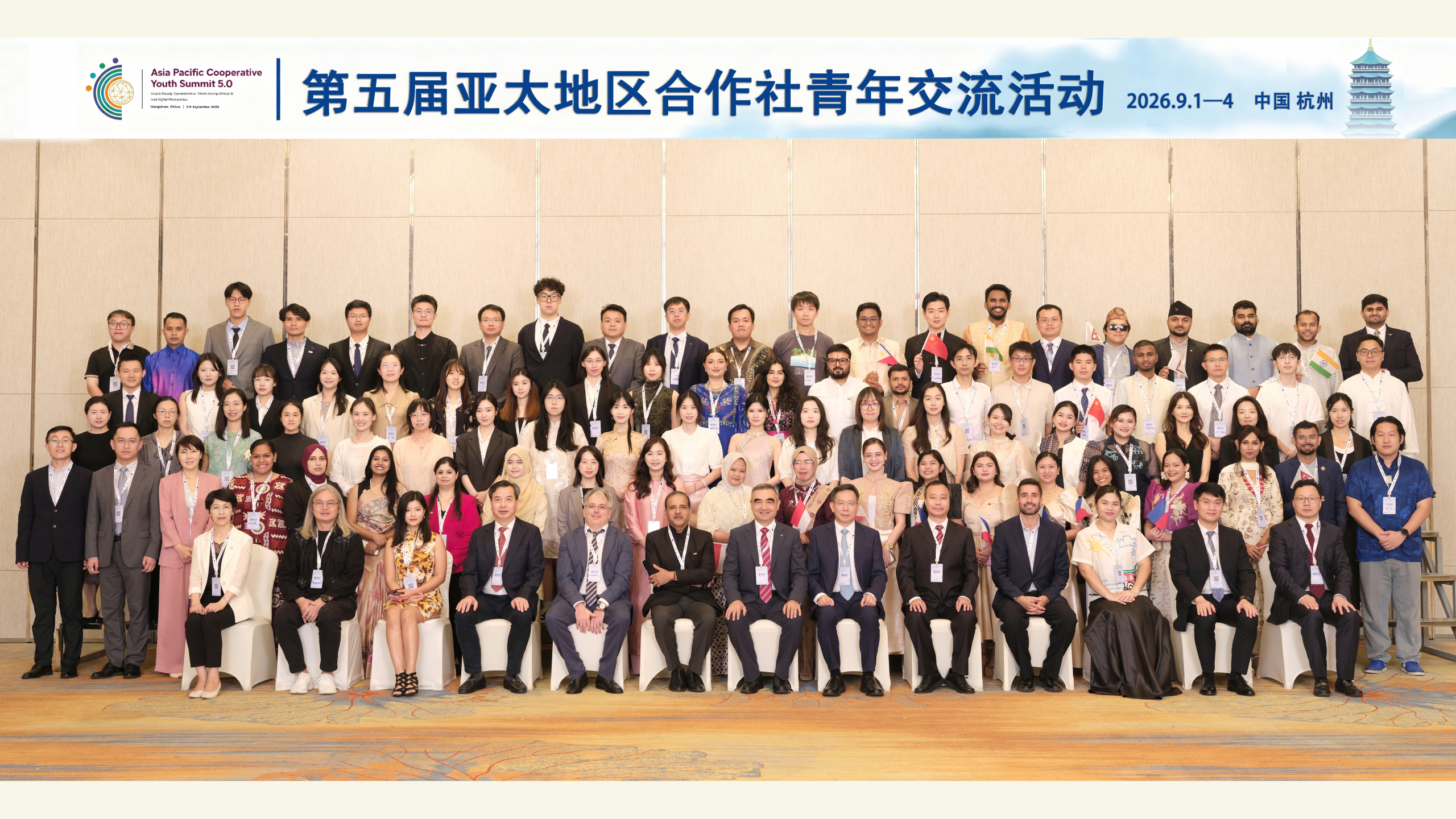
From 1 to 4 September, 130 young cooperators, policymakers, technologists and cooperative leaders from 13 countries gathered in Hangzhou, China, for the fifth edition of the Asia Pacific Cooperative Youth Summit 5.0. Organised by ICA-AP and its Committee on Youth Cooperation (ICYC) and hosted by the All China Federation of Supply & Marketing Cooperatives (ACFSMC) and the Zhejiang Institute of Economics and Trade (ZJIET), with support from the ICA-EU Partnership Financial Framework for Partnership – Phase 2, this year’s Summit also marked its 10th anniversary, a decade on from the first Summit in Bali in 2016. Hangzhou proved a fitting host: a city that struck the perfect balance of tradition, culture, innovation and technology for a Summit built around exactly that intersection.

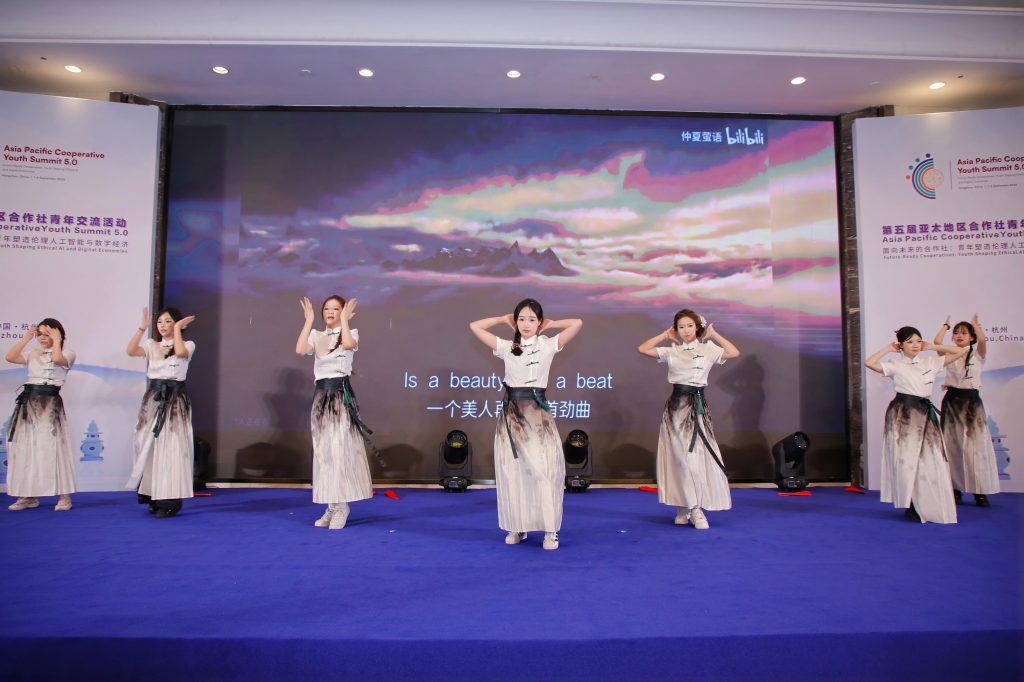
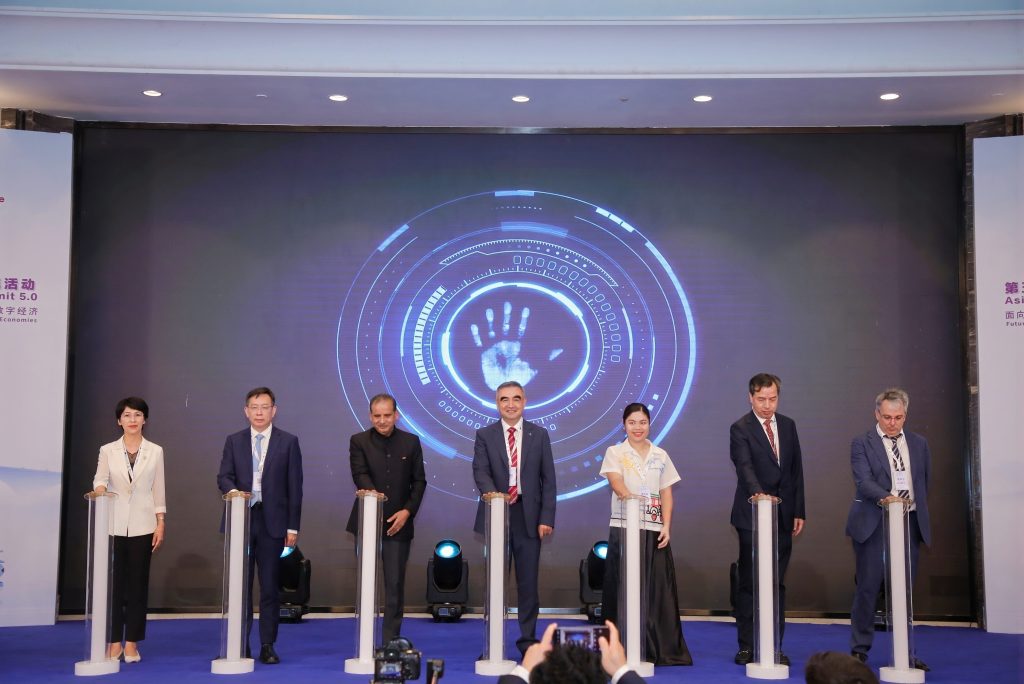
The theme, “Future-Ready Cooperatives: Youth Shaping Ethical AI and Digital Economies,” set the tone from the Inauguration Ceremony onward, opening with cultural performances that included a vocal recital and a solo on the guzheng, the traditional Chinese plucked long zither, alongside a face-changing (bian lian) performance. Addresses followed from Mr. Guo Fuchun, President, Zhejiang Institute of Economics and Trade (ZJIET); Mr. Balasubramanian G. Iyer, ICA-AP’s Regional Director; Mr. Pierre Yves Lucas, Team Leader of the Cooperation Section at the EU Delegation to China; and Mr. Adili Wubuli, President of ACFSMC’s Board of Supervisors and an ICA-AP Vice President. Mr. Zhu Hongfei, Deputy Director-General of Zhejiang Province’s Department of Education, spoke of the province’s experience confronting algorithmic bias and the digital divide, calling on delegates to treat the Summit as a window into ethical multilateral dialogue. Mr. Wubuli was more direct about the stakes: with AI development shaped by concentrated platform power, he argued, the cooperative model offers a genuine people-centred alternative, provided it’s approached “with caution, checks, and balances.” Mr. Iyer struck a similar note, framing the task ahead not as resisting or blindly embracing new technology, but shaping it responsibly in service of people, while Mr. Lucas reminded delegates that young cooperative leaders are “architects of change,” not just participants in it.
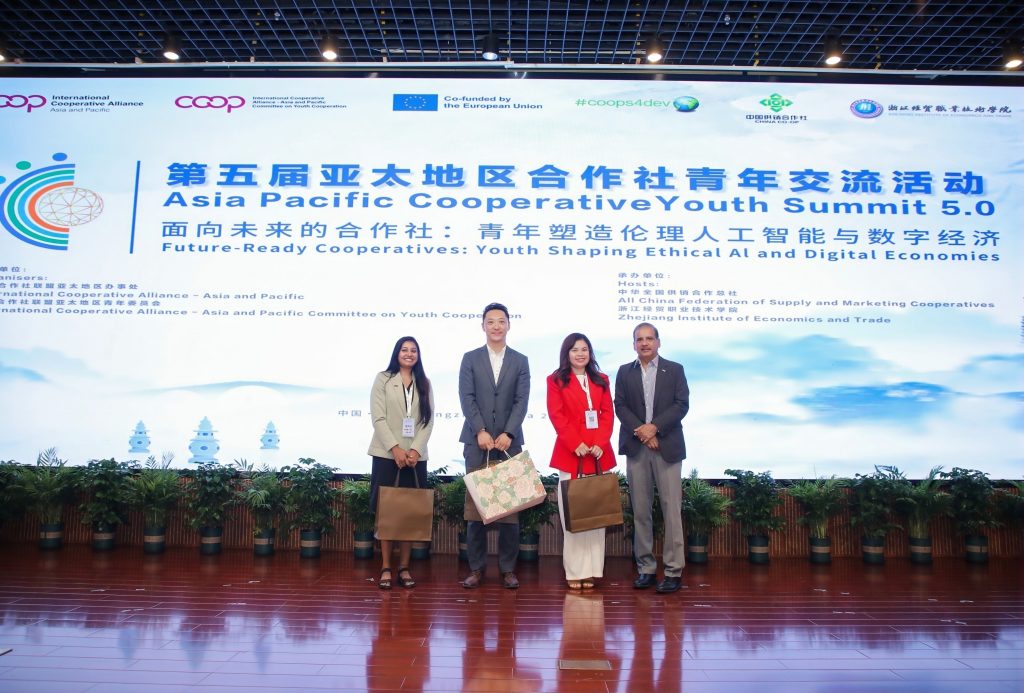
The Opening Session set the substantive agenda. Ms. Dulce Bustamante, Chairperson of ICYC, underscored how timely the theme was, framing AI as a tool to be shaped rather than a force to defer to. Mr. Zhang Lei, Director of the Talent Sustainable Development Center at the Alibaba Foundation, walked delegates through the scale of Alibaba’s operations in China and the initiatives the company runs to ensure no one is left behind in the AI race. Ms. Monalisa Kashyap, ICA-EU’s Program Coordinator & Advocacy Officer at ICA-AP and ICYC Secretary, closed the session by tracing the ICA-EU partnership’s decade-long support for the Youth Summit, noting that Asia-Pacific remains the only ICA region to run an initiative like it.
Over the four days that followed, delegates moved between plenaries, hands-on workshops and policy exercises, beginning with the Plenary Jam on cooperatives in the digital economy. Moderated by Ms. Yuyu Chen, Programme Analyst at UNRISD, the panel brought together Mr. Paulus Ohio, CEO of INKUR Federation, Indonesia; Mr. Ho Wei Liang of the Global Youth AI Advisory Board; Mr. Song Dongpo, founder of China’s MiFly Airline Coop (and the winner of previous edition of Coop Pitch); and Ms. Dulce Bustamante.
From the plenary stage, the Summit moved to hands-on work with a Capacity Building session on the start-up journey. Facilitated by Mr. Rayann Koudaih, Technical Specialist for Coop & SSE Development at the ILO, it drew some of the strongest participation of the week: delegates built their own hypothetical cooperatives from scratch, working through likely challenges, scope and governance before pitching their ideas back to the room. It broke down barriers between delegations fast, and the range of perspectives that surfaced made for one of the Summit’s richer learning moments.
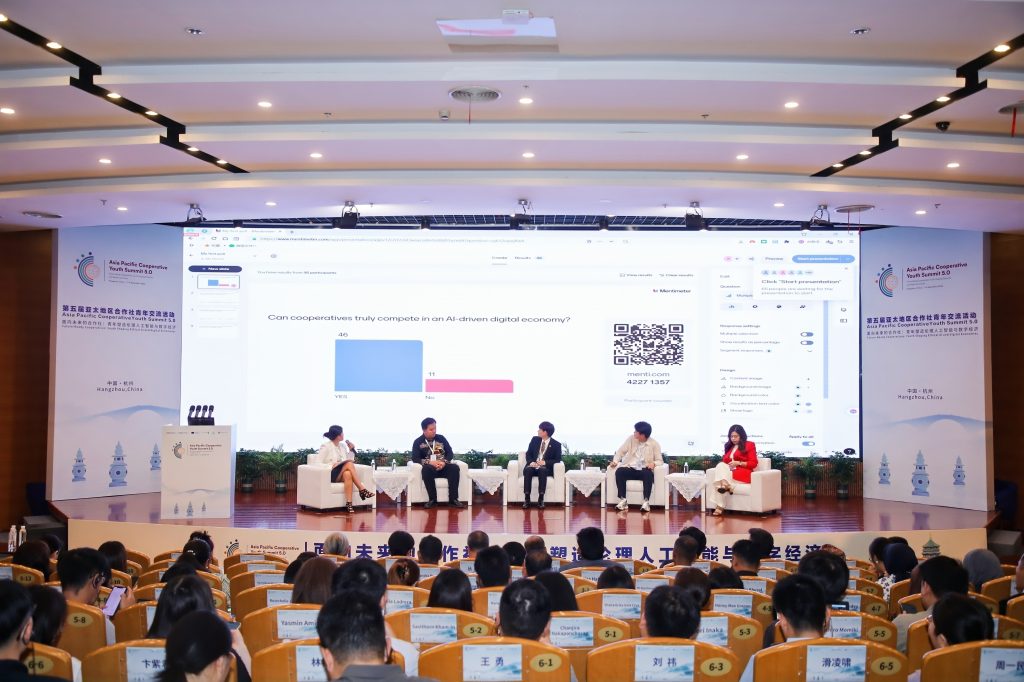
That same practical energy carried into the session on Digital & AI Toolkit for Cooperatives, led by Mr. Jimmy Boey Wai Keong, Board Member and Trainer at the Singapore Professionals and Executives Cooperative (SPEC), which split neatly into two halves across its morning and afternoon runs. Mr. Boey opened with a short introduction to his own work before taking questions on the harder, less comfortable side of the AI conversation: how much AI too much in cooperative work, governance and communications is, and where government responsibility begins. The second half turned hands-on: using a toolkit he’d built for the session, he walked participants through building their own AI-powered dashboards, websites and newsletters, leaving the room genuinely upskilled rather than just informed.
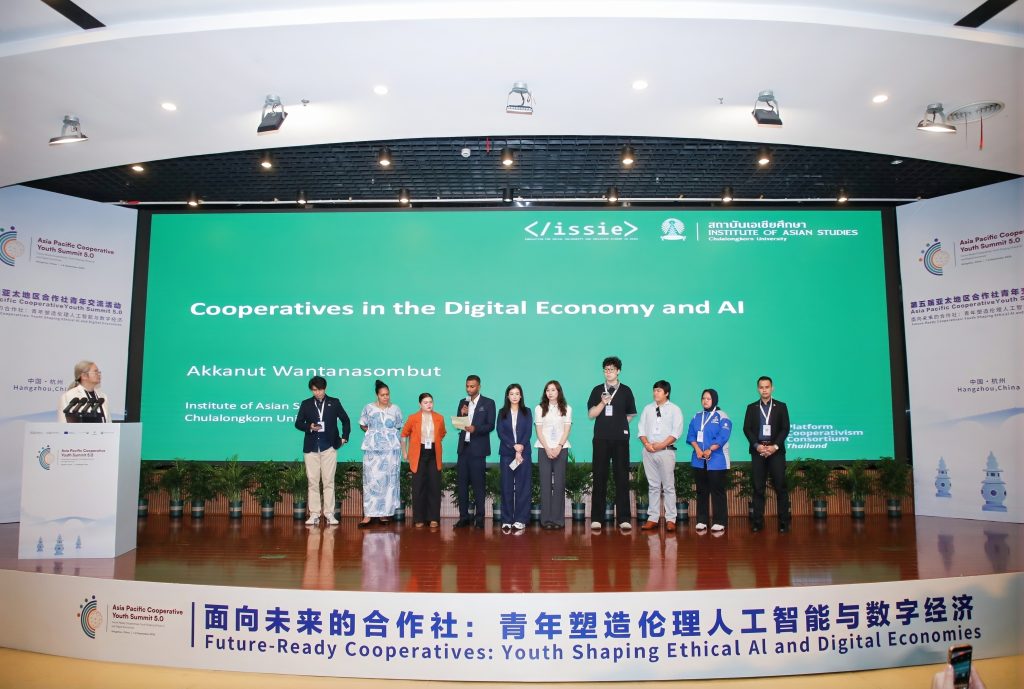
Perhaps the Summit’s most novel session came next: the Policy Hack Dialogue: Designing Ethical AI Policy Together, facilitated by Mr. Akkanut Wantanasombut, Head of Innovation for Social Solidarity and Inclusive Economy in Asia at the Institute of Asian Studies. Seven groups were each handed a different policy scenario spanning AI ethics, platform regulation and youth inclusion, and asked to develop concrete policy recommendations, drawing on their own lived experience as cooperative members. Groups then took turns on stage describing their scenario and presenting their recommendations — a genuine brainstorming exercise that doubled as a working template for how any cooperative member could act on a policy issue affecting their day-to-day work or wellbeing.
The Youth Open Mic and Story Circle gave the Summit its most personal moments, with presentations from KJMP Sasuka Tech (Indonesia), Reframing Architects Cooperative (Palestine), Butterflies NGO (India) and Chongxing Technology (China) standing out in particular — stories of resilience and strength that put the power of cooperation in very human terms.
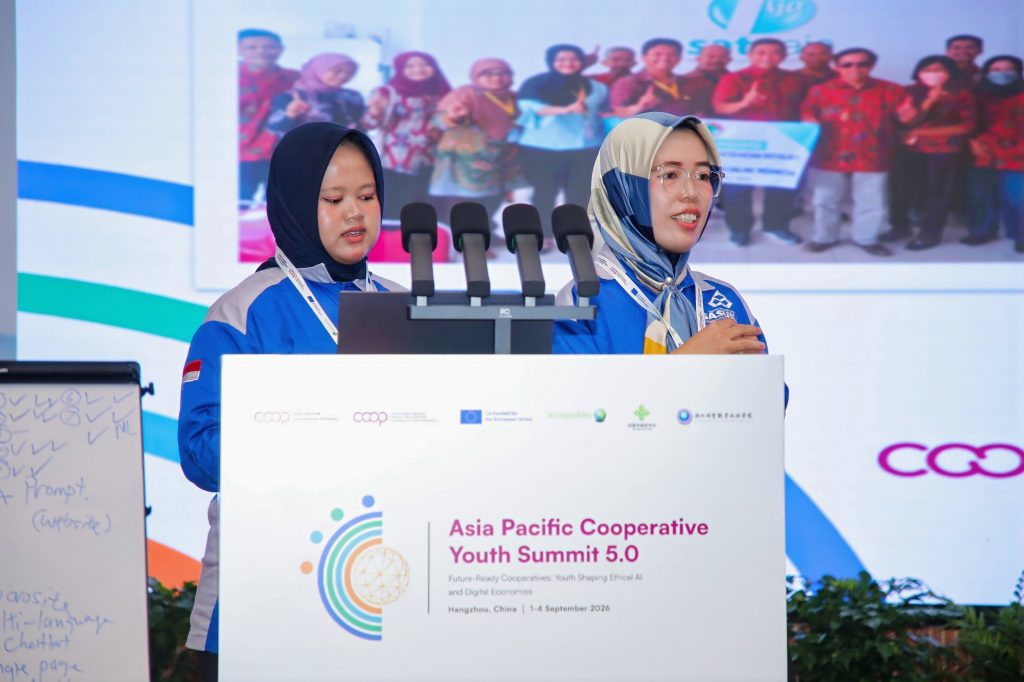
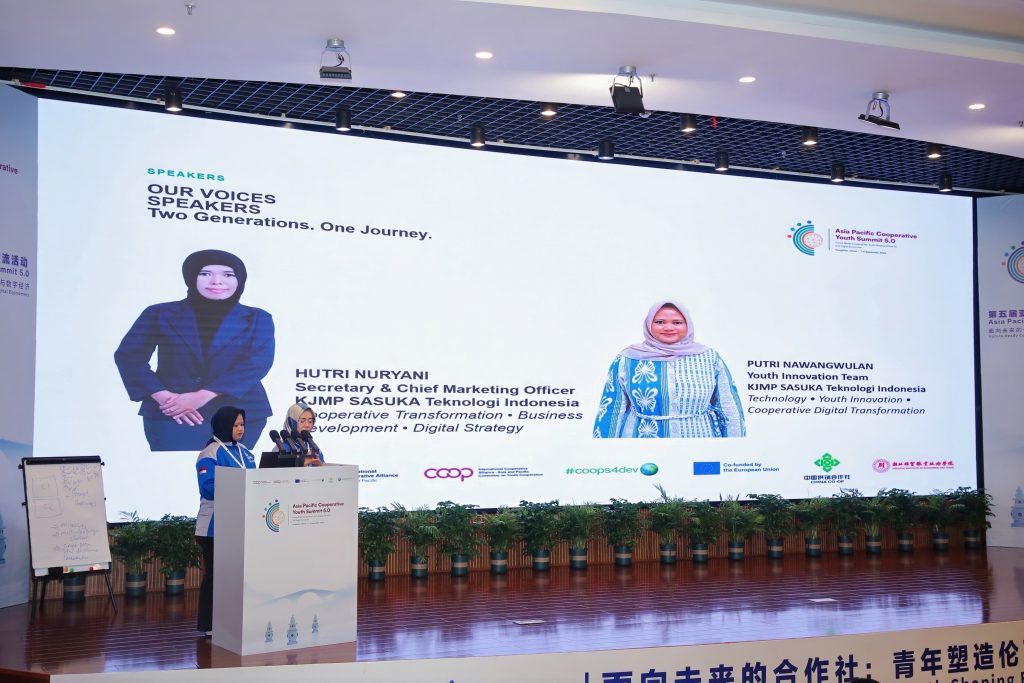
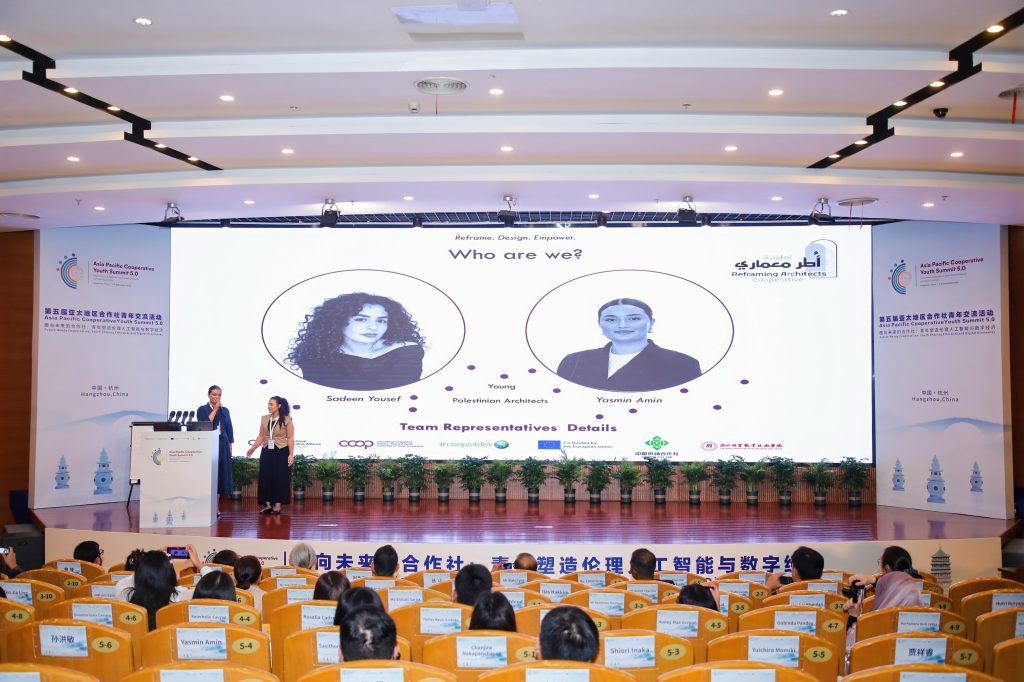
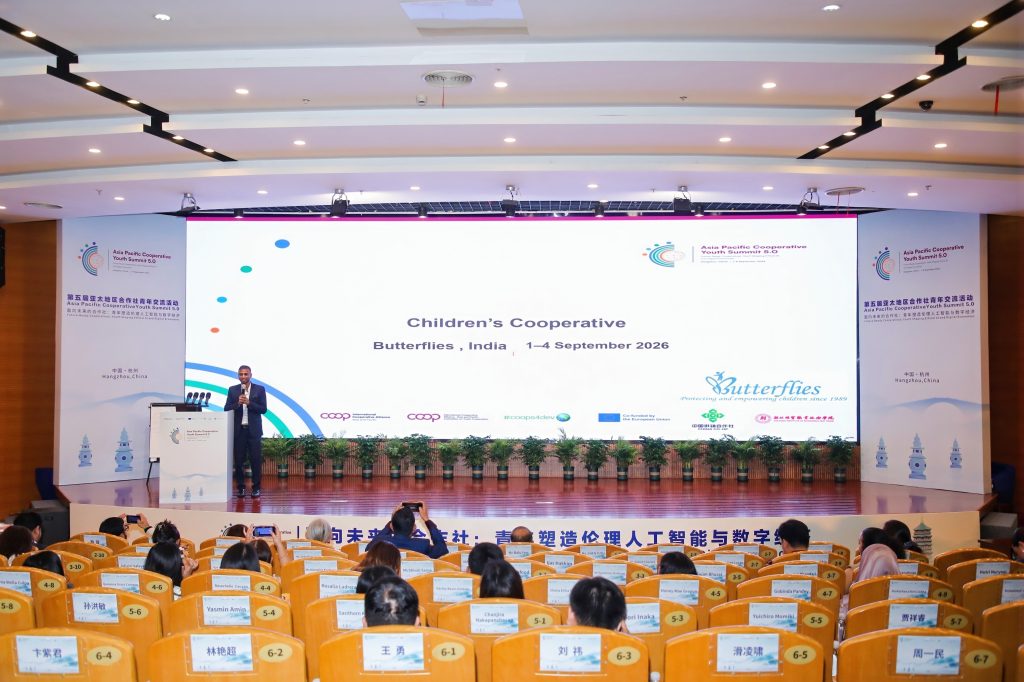
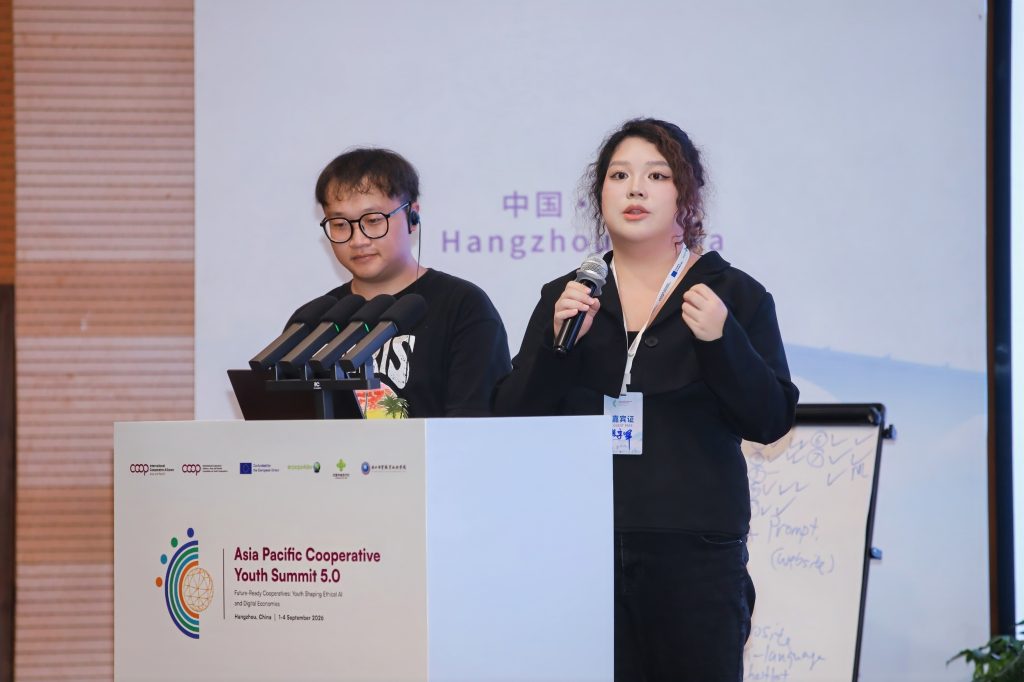
That same spirit carried into the Summit’s centerpiece, the Coop Pitch Finale, which drew nine finalist teams from China, Fiji, India, Indonesia, Japan, the Philippines (two teams), Vietnam and Palestine, each pitching cooperative-driven solutions before judges and partners. Palestine’s Reframing Architects Cooperative took first prize for its cooperative architecture model, with China’s Chongxing Technology finishing second for turning sea waste into cat litter and Vietnam’s Chuc Son Smart Growth Cooperative placing third for its smart agriculture solution — winning teams walk away with cash prizes, mentorship and access to key partners.
The Summit closed on 4 September with delegates launching their APCYS 5.0 Commitments, taking part in a Go Green Campaign, and visiting technology enterprises Alibaba and iFlytek — sending participants home with both a set of shared commitments and a firsthand look at the digital economy they’d spent four days debating how to shape. The Closing Ceremony brought the Summit full circle, with remarks from Mr. Cong Shan, Director General of ACFSMC’s International Cooperation Department; Ms. Liu Xiuli, Secretary of the CPC ZJIET Committee; , followed by the announcement of Coop Pitch winners by the jury, the APCYS 5.0 Commitment Launch , programme reflections from Mr. Abhishek Kumar and Ms. Gelizabeth Cabuhat ICYC Vice-Chairpersons, and a vote of thanks by Mr. Balasubramanian G. Iyer. It was a fitting close to a Summit that spent four days insisting the future of AI in cooperatives should be shaped by the people it’s meant to serve.
WATCH THE FULL HIGHLIGHT VIDEO HERE