
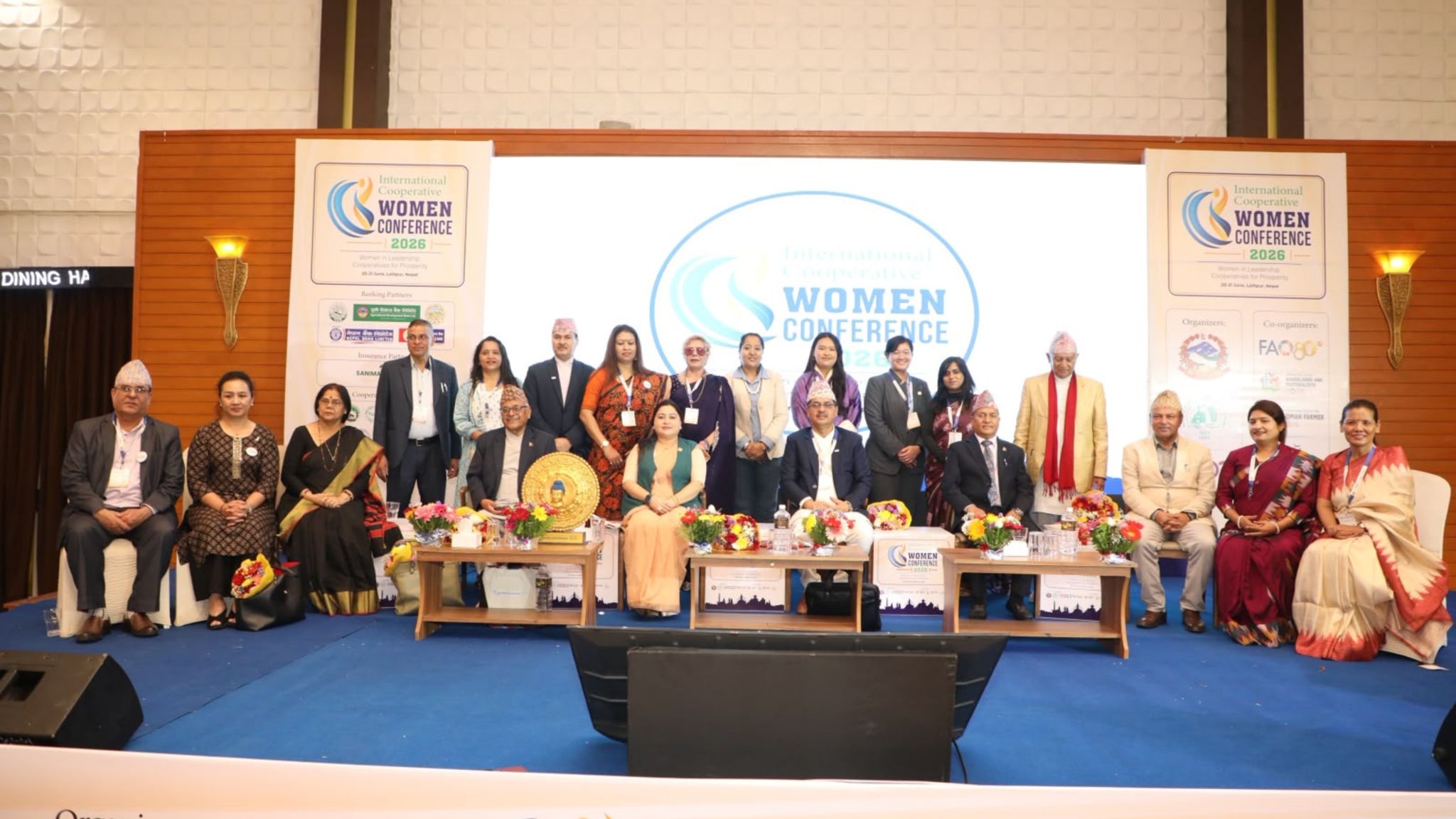
ICA-AP Contributes Regional Perspective at International Cooperative Women’s Conference 2026
International Cooperative Alliance – Asia and Pacific (ICA-AP) participated in the International Cooperative Women’s Conference 2026, held in Lalitpur, Nepal, on 20 and 21 June, bringing together nearly 400 women cooperators, policymakers, government officials, and development partners to advance women’s leadership in the cooperative movement.
Representing ICA-AP, Ms. Nitya Shukla, Lead, Gender and Cooperative Development, presented a regional perspective on women’s leadership in cooperatives across Asia and the Pacific. Drawing on examples from the Philippines, Nepal, Jordan, Sri Lanka, and Fiji, she highlighted the need to bridge the gap between women’s participation and leadership while emphasizing opportunities in digital transformation, the green economy, youth engagement, and stronger regional collaboration.
The conference concluded with the adoption of the Kathmandu Declaration 2026, reaffirming commitments to strengthen women’s leadership, promote gender responsive policies, support climate resilient agriculture, and build more inclusive and resilient cooperative ecosystems.
Visit to Padmavati Saving & Credit Co-operative Society Ltd.
During a recent visit to Padmavati Saving & Credit Co-operative Society Ltd. (Padmavati SACCOS) in Lalitpur, Nepal, Ms. Shukla had the opportunity to learn about a cooperative that has built its success not only on strong financial performance but also on meaningful member relationships.
Established in 1993, Padmavati SACCOS serves more than 2,400 members and has grown into a well-respected cooperative with over NPR 527 million in assets. Over the years, it has received several recognitions for its contribution to Nepal’s cooperative movement. The cooperative also supports member entrepreneurship through initiatives such as the Padmavati Catering Service and the Padmavati Entrepreneurial Women’s Group, reflecting its commitment to creating opportunities that go well beyond financial services.
One practice stood out above all. The cooperative encourages every member to visit at least once a month – a simple yet thoughtful initiative that goes beyond routine transactions. These monthly visits give members a chance to interact with staff, stay informed about cooperative activities, seek financial guidance, and strengthen their sense of ownership in the institution. Rather than being merely account holders, members remain active participants in the life of their cooperative.
In an increasingly digital world, Padmavati SACCOS is a reminder that sustainable cooperatives are built not only through financial growth but through regular human connection and active member engagement and how a simple practice can reinforce cooperative identity and keep members at the heart of the organization.