
In Pahang, Cooperatives Showed What Tourism Looks Like When Communities Own It
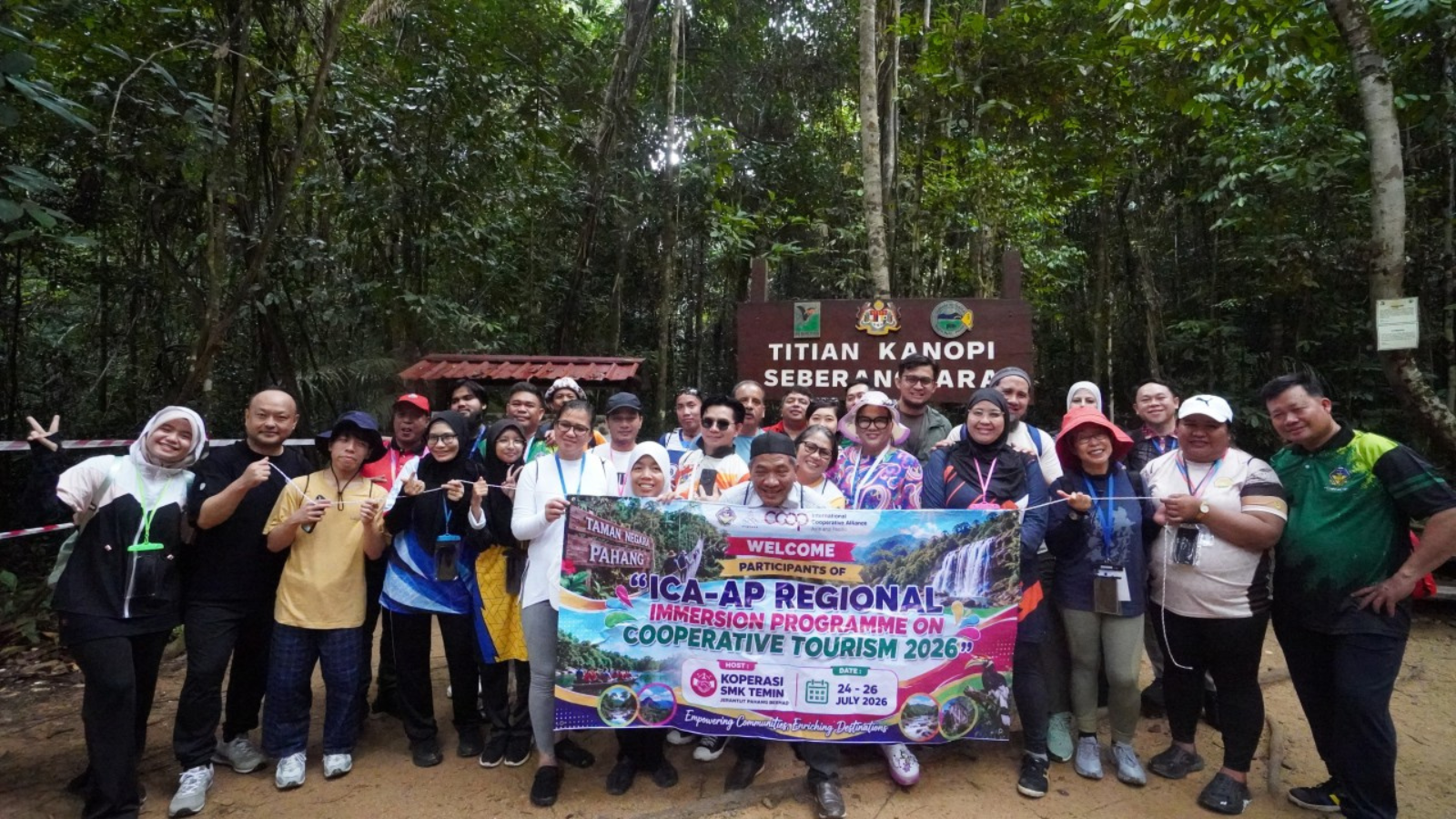
From 22 to 26 July, around 30 delegates from Cambodia, India, Indonesia, Japan, Malaysia, Palestine, the Philippines and Vietnam travelled to Raub, Jerantut and Kuala Lumpur, Malaysia, for the ICA-AP Regional Immersion Programme on Cooperative Tourism. Jointly organised by ICA-AP’s Committee on Trade & Business and its Committee on Cooperatives in Educational Institutions (ICEI), and hosted by ANGKASA, Malaysia’s national apex cooperative body, the five-day programme carried a clear purpose: to show that cooperative tourism is not just a community activity, but a viable business model that can generate income, open new markets and strengthen trade links between cooperatives across Asia-Pacific. Many delegates arrived expecting a lesson in tourism. Most left convinced it is one of the most powerful, and most underappreciated, ways cooperatives can build bridges between people, cultures, communities and countries.
From the moment delegates landed at Kuala Lumpur International Airport, the experience was delivered entirely by cooperatives, starting with a welcome from ANGKASA and a journey designed to demonstrate how school cooperative tourism and community-based homestay cooperatives can diversify income, create youth engagement and drive local economic participation.
For the first two nights, delegates stayed not in hotels but with host families through Koperasi Homestay Kampung Peruas Raub Berhad (KOPERAD), collecting vegetables, cooking traditional Pahang dishes, learning local games and watching demonstrations of the Tanjak, Pahang’s iconic headgear, all led by the women and young people at the heart of the village. From there, the group visited KOSTEM, the student-run cooperative at Jerantut Secondary School, before travelling to Taman Negara, one of the world’s oldest rainforests, where conservation and indigenous heritage met community-led tourism.
Mr. Balu Iyer, ICA-AP Regional Director, said what stood out most was not any single stop but how seamlessly the cooperatives worked together. Transport, accommodation, food, education and nature tourism were woven into one experience through the cooperative model, each organisation adding its own strength to something none could have delivered alone, cooperation among cooperatives, made visible. Malaysia’s homestay families are not required to form cooperatives, but many do, because it lets them share benefits fairly and tap into financing, governance and training support from both the tourism and cooperative ecosystems.
For delegates, the takeaway travelled home with them: community tourism, agricultural tourism and cultural heritage initiatives already exist across the region. The opportunity now is connecting them into cooperative tourism ecosystems that keep value inside the communities that create it. As one delegate put it, no amount of digital transformation replaces a meal cooked by a host family, or the trust built by being welcomed into someone’s home.